Showing posts with label National Parks Service. Show all posts

Wednesday, July 17, 2019

Roadie: Glacier Bay National Park

In the background, the Mendenhall Glacier. (7/1/2019)
Don't ever become so jaded that you begin to think that you can see too much incredible natural scenery. After 3+ hours whale watching, we took a quick bus trip to Glacier Bay National Park and Reserve, an American national park located in Southeast Alaska west of Juneau. The park is also part of the Tongass National Forest, a fact which offers a sense as to the size and scope of Tongass--our earlier stop in Ketchikan took us to a different corner of the same rainforest! Still feeling the natural high from the wind, waves and humpback whales, vibing with the glacier and waterfall from a distance was still easy to do.

Mendenhall Glacier and Nugget Falls both of which empty into
Mendenhall Lake. (7/1/2019)
Glacier Bay National Park and Reserve is yet another wonderful
national park. (7/1/2019)
The Mendenhall Glacier... catch it now before its gone. (7/1/2019)
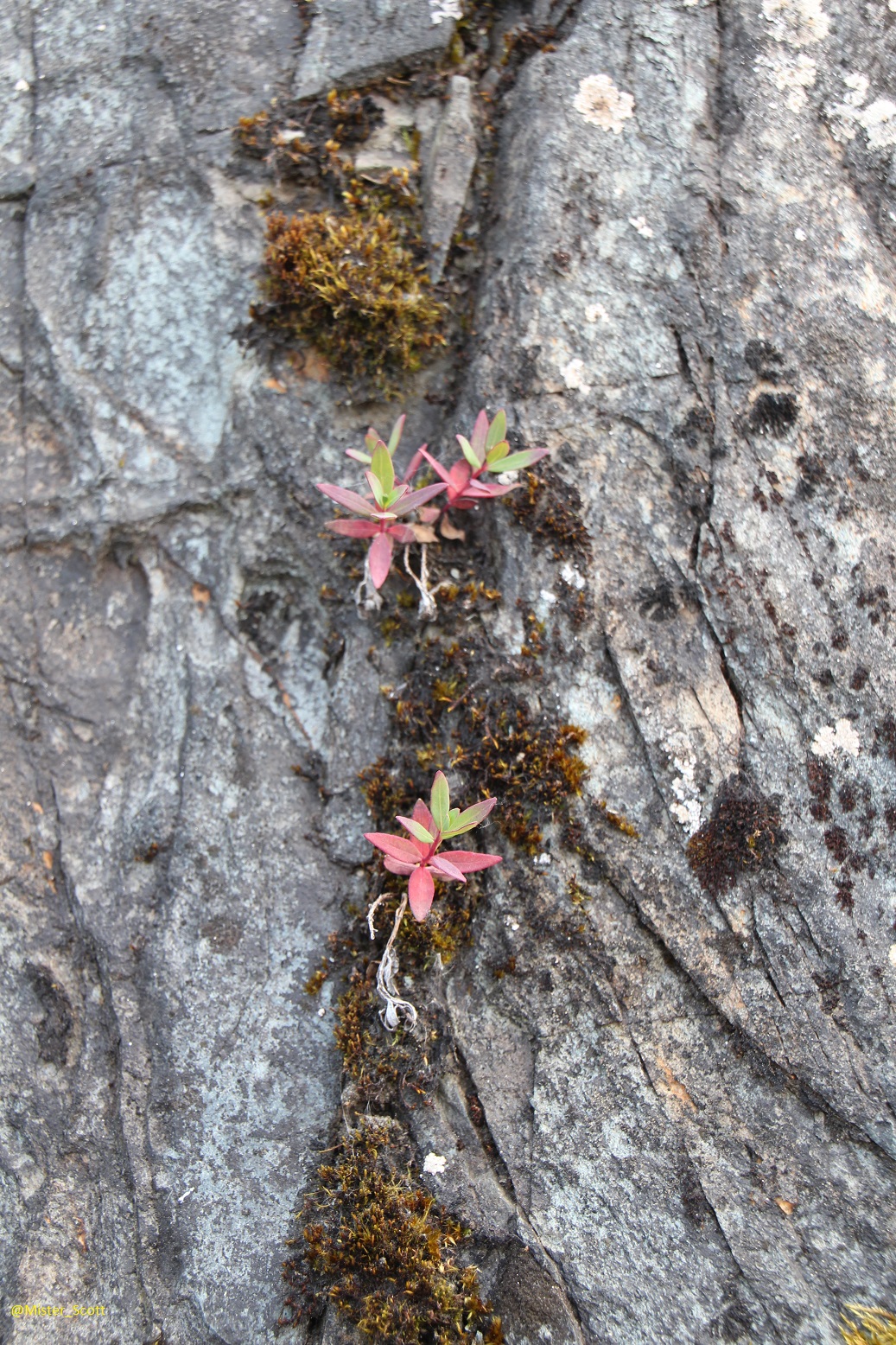
There is a trail that takes one to the base of Nugget Falls, and closer to the Mendenhall Glacier. Given the short amount of time we had in the park--and that those we were traveling with being too tired to take the 2 mile trek, Anne and I opted to view from afar with our family. Like all the national parks and sites we have visited there were many smaller things, in this case lichen and birds, that were as interesting to observe as the park's headliner, the Mendenhall Glacier.

Nugget Falls to the immediate right of the Mendenhall Glacier. (7/1/2019)
My brother-in-law and my brother. (7/1/2019)
(7/1/2019)
The "Tern Stop" was a pick-up/drop-off point for visitors as well
as an indicator of things to come. (7/1/2019)
Arctic tern sitting on its nest with a friend. (7/1/2019)
Arctic tern offering a friendly reminder. (7/1/2019)
(7/1/2019)

Monday, July 08, 2019

Roadie: Tongass National Forest, Ketchikan

Canopy of Tongass National Forest. (6/30/2019)
Following Downtown Ketchikan, we headed on a guided tour of a trail in the Tongass National Forest, known by the U.S. Forest Service as the "crown jewel". The Tongass National Forest in Southeast Alaska is the largest national forest in the United States. Most of its area is part of the temperate rain forest WWF ecoregion, itself part of the larger Pacific temperate rain forest WWF ecoregion, and is remote enough to be home to many species of endangered and rare flora and fauna. The Tongass is managed by the United States Forest Service. (Wikipedia)

The hike we went on focused on the scenery of Tongass National Forest Park as part of an eco tour from Ketchikan. The entire excursion consisted of the hiking tour, a visit to the Raptor Rehabilitation Center and a conversation with a native American artist who still makes totem poles in the traditional manner. We were part of a small group of just 10 people (four of whom were part of our party) which meant we were afforded plenty of time to ask questions of our guide.

Popular among bears, the fruit of the Rubus Spectabilis is popularly referred to
as a “salmonberry” due to its resemblance to salmon eggs. (6/30/2019)
(6/30/2019)
Naturally felled trees would have of other seedlings taking root
on them resulting in a beautiful mix of seedlings coming from a
single stump. (6/30/2019)
Fungus among us. (6/30/2019)
At the base of some trees were small "caves" in which bears would
briefly hide from the elements. Contrary to what is depicted in
movies, bears like small enclosed spaces in which they can snuggle. (6/30/2019)
(6/30/2019)
Devil's club (Echinopanax horridum) is a large understory shrub common in
arboreal rainforests of the Pacific Northwest. The flowers are produced
in dense umbels, each flower small, with five greenish-white petals.
The matured fruit will be red (Wikipedia). The leaves are used by bears coming out
of hibernation as a diuretic. (6/30/2019)
Devil's club is covered with brittle yellow spines that break off easily if the
plants are handled or disturbed thus its common name. (6/30/2019)
Pine cones. (6/30/2019)
Yellow salmonberry. (6/30/2019)
Lichen the wide array of Alaskan lichen. (6/30/2019)
Snapped this pic of Mystery Bird after hearing it call a number of times;
as Alaska's only bird with ear tufts, going to guess it's a Great Horned Owl. (6/30/2019)
Bear Sign One: Scat used to mark territory. (6/30/2019)
Bear Sign Two: claws marks on tree to communicate size to other
bear thereby also marking territory. (6/30/2019)
Bear sign three: trampled trails among high grass from forest to creek. (6/30/2019)

Tuesday, February 28, 2017

Roadie: Roosevelt Birthplace, NYC

My wife outside the Theodore Roosevelt Birthplace located on
East 20th Street, New York City. (2/24/17)
Last September,  my wife and I took a trip to FDR Presidential Library and Museum and this Winter Recess while visiting my stepson at college we found time to stop and take a tour of Theodore Roosevelt's Birthplace. Each of the multiple times over the past four years that we have been in New York City, Anne and I have endeavored to locate and visit National Park sites and monuments and this trip was no different. As a high school English teacher, I enjoy researching historical background relevant to various texts I use in class, but have never really felt like much of a student of American history. Visiting historical sites maintained by our U.S. National Parks Service, along with my wife's own passion for American history, has changed that.

Exterior of Theodore Roosevelt Birthplace. (2/24/17)

Close-up of dedication. (2/24/17)

Upstairs for "regular" visitors to the home, downstairs
for the help. We enter through the downstairs
entrance. (2/14/17)

Historical artifacts and documents with contextual information are
located in lower level. (2/24/17)

Portrait of Theodore Roosevelt's father, also named Theodore.
Due to the potential for confusion, the eventual president is
nicknamed "T.D." (2/24/17)

Living room where the Roosevelt's would
greet visitors. (2/24/17)

Living room. (2/24/17)

Close-up of living room chandelier. (2/24/17)


Bookshelf in TD's favorite room, the family library. (2/24/17)

Other than reading, the Roosevelt's also enjoyed looking
at the stereoscope--think old-timey View Master. (2/24/17)

The small velvet chair to the left of the fireplace was
specially made for TD whose skin was very
sensitive. (2/24/17)

The Roosevelt bedroom, where the future president
and his siblings were born. (2/24/17)

Close-up of chair in the bedroom. The circular silver hardware
on the wall opens to an early intercom system: the Roosevelt's would
open the apparatus and yell to the floor below. (2/24/17)

A two bedroom home, the parents shared one room and the
Roosevelt children, including TD, shared a second adjacent
room. It was dark and the "Exit" sign is the only structural modification
made to the reproduction of the original house. (2/24/17)

Close-up of porcelain doll in Roosevelt children's bedroom. (2/24/17)
The U.S. Park Ranger who conducted our tour did a fantastic job explaining each period room, sharing numerous anecdotes and offering valuable historical context. So much of what I learned from our tour is impossible to photograph, and I look forward to sharing these with my classes when the circumstances, and source documents, provide the opportunity. Like nearly every U.S. National Park Services site we've visited, I strongly recommend stopping by for an informative visit should you find yourself in the neighborhood.