Showing posts with label super heroes. Show all posts

Monday, July 25, 2016

Summer Reading: The Secret History of Wonder Woman

Most of my reading of Wonder Woman in comic books has been limited to the her appearances with either the Justice League or Society titles and the John Byrne run of issues (#101-136) from the mid-1990's. Given that DC Comics recently went through a narrative soft-reboot of their comic book universe, Rebirth, I purhcased the first three issues of Wonder Woman as a means of further broaden the number of cape comics on my monthly pull list.

While I have a stronger background in the hero and her medium than the average New York Times Bestseller's list reader,  I am in no way an expert. Historically, unlike Marvel Comics, DC Comics has not perpetuated the fantasy that every character can be linked back to a single creator (for Marvel, Stan Lee), and DC's lack of a mythic bullpen of recognizable artists and writers can result in a distancing between fanboy, character, and creator. Though not one of it's purposes, The Secret Life of Wonder Woman by Jill Lepore helps to fill in a necessary gap: what was the personal and historic context in which an individual created the first popular female superhero?
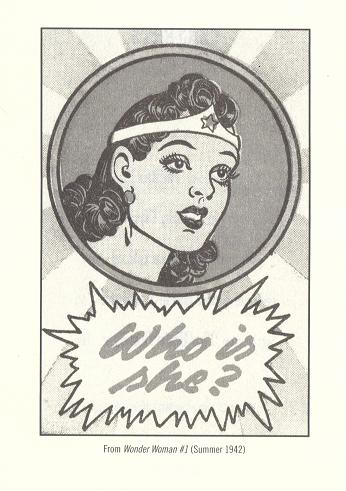
Lepore does dynamic things in presenting and developing her subject, resulting in a novel that is equal parts biography, history text and comic book analysis. There are oodles of excellent reviews of the novel (including Dwight Garner's "Her Past Unchained" from the New York Times and "The Freaky, Fabulous, Feminist 'Secret History' Of Wonder Woman" by NPR's Etelka Lehoczky) that eloquently capture some excellent observations regarding the book's strengths and weaknesses. In most cases, reviewers, like I, recommend The Secret Life of Wonder Woman as a worthy summer read.

Even when reading for entertainment purposes, it can be difficult not to occasionally put on my "teacher's hat" while reading. Not surprisingly, this was also the case The Secret Life of Wonder Woman. Reflecting on this analytical angle, in addition to a couple of observations, I've clumsily identified potentially relevant New York State Common Core Learning Standards for English Language Arts & Literacy for future exploration:
  • The research on display is both deep and incredibly accessible, even to those with (I suspect) little interest in comics books or women's history. Interestingly, one anecdote Lepore shares (that is also echoed in a Wonder Woman story--Lepore gives multiple examples of Wonder Woman creator William Moulton Marston's art reflecting his life) illustrates this point. One of the many lessons Wonder Woman imparts upon men, and boys, is the untapped potential for finding excitement in the study of history... especially women's history (224). The Secret Life of Wonder Woman is a fine example of making history interesting. In its entirety, The Secret Life of Wonder Woman is an excellent illustration of standard 1 of the Reading Standards for Informational text (RI) at Grade 11 in Key Ideas and Details: "Cite the textual evidence that most strongly supports an analysis of what the text says explicitly as well as inferences drawn from the text." Reading about and researching topics of greater interest beyond the standard issues-based subjects, might be nice, and this text provides an example of how it can be done in a manner that is engaging.
  • The author objectively presents the lifestyle choices (among them two "wives" and an interest in bondage) made by Wonder Woman creator William Moulton Marston, avoiding the cheap way out by appealing to unnecessary lascivious language. While book reviews for her book seem to emphasize this facet of the story, Lepore highlights these freakier angles on Marston's story in the context of the larger Wonder Woman "origin." The author uses these facts to highlight the reasoning behind some of the creative choices Marston made in developing the character. Lepore's precise use of word choice that is not exploitative woudl be an interesting way to consider standard 4, also in Reading Standards for Informational text (RI) at Grade 11, but in Craft and Structure: #4. "Determine the meaning of words and phrases as they are used ... specific word choices on meaning and tone, including analogies or allusions to other texts."
  • The manner in which Marston's effectively developed and utilized Wonder Woman as his literary voice is explored. It is clear that more than most, writer Marston (and the experiences of he and his family) was Wonder Woman, and that the creator/author had intended to use his character as a vehicle to promote a specific social agenda. A Harvard trained psychologist, and longtime experimenter in social behavior, every aspect of Wonder Woman was crafted through the lens of promoting a specific responses from the reader. When Marston was not the one responsible for writing Wonder Woman her "power" was weakened. There are multiple examples given of how the values and qualities Marston worked to imbue Wonder Woman with are minimized in the hands of other writers. For example, as a member of Justice Society, Wonder Woman is relegated to the role of secretary, not even taken on missions, rather than the social justice warrior Marston envisioned. On multiple levels, this invutes a consideration of writer's craft, or in the language of CCLS RI #6. "Determine an author’s point of view or purpose in a text in which the rhetoric is particularly effective, analyzing how style and content contribute to the power, persuasiveness, or beauty of the text."
As either an entertaining (and informative) summer read or possible class independent read for high schoolers, The Secret Life of Wonder Woman by Jill Lepore is a winner.


Wednesday, July 08, 2015

Walking Dead with the Fantastic 4

First issue covers: Fantastic Four: Foes (2005) by Jim Cheung and Before the 
Fantastic 4: The Storms (2000) by Charlie Adlard.
While reorganizing my comic book collection this summer (for the umpteenth time), I was pleasantly surprised to come across some individual earlier works by the creative team of the über-successful The Walking Dead comic book, writer Robert Kirkman and artist Charlie Adlard. The connection was made as I was chronologically filing older issues of mini-series featuring my favorite Marvel comic book characters, the Fantastic Four. While neither Kirkman nor Adlard contributed to the main team title (which was recently made "dead" by Marvel Comics), both were part of two separate creative pairings that each produced a miniseries involving the team.

Cover to The Walking Dead #50
by artist Charlie Adlard.
The timeline of The Walking Dead's ascension to cultural phenom suggests that both Fantastic Four mini-series came prior (especially in the case of Adlard's work on The Storms) to the pair's work on the popular survival/zombie series. The first issue of The Walking Dead, written by Robert Kirkman and illustrated by Tony Moore, hit comic book stands in October 2003. By the release of issue 7 in April 2004, Moore had given way to the now familiar black-and-white artistic stylings of Charlie Adlard. The Walking Dead television series premiered in the U.S. on October 31, 2010.

While Kirkman has had success on Marvel properties such as (shocker!) Marvel Zombies (2005), the real back issue find here for me was Adlard's early work on an unusual background building mini-series featuring two key members of Marvel's First Family. Other than the recent publication of his earlier online series Astronauts in Trouble (hailed in recent Image solicits as "The series that brought... artist Charlie Adlard to the attention of Robert Kirkman"), I haven't seen any other work by him, that is, until now. Both Fantastic Four: Foes, written by Kirkman, and Adlard's pencils on Before the Fantastic 4: The Storms reveal two independent creative minds that would one day cumulatively birth The Walking Dead cultural phenomenon.

Fantastic Four: Foes was released as a six issue limited series in 2005 written by Robert Kirkman with art by Cliff Rathburn. Though I have not read any of Kirkman's other superhero books (Ultimate X-Men and his creator-owned Invincible, for example), this one plays into the strengths demonstrated in both The Walking Dead comic and television show: nuanced character development, with an emphasis on smaller interpersonal character interactions. This approach works well as this miniseries seeks to show us the Fantastic Four as family; the entire traditional supporting cast is along for the ride including Alicia Masters and the Richards children. The focus of the narrative is on how two of the family's foes (get it?) team-up to use the combined powers of  nearly their entire rogues gallery to finally defeat them. In telling the story, Kirkman tries to get at what motivates individuals, in this case super powered crazy individuals, to repeatedly attempt to do that thing which they have demonstrated little ability to succeed at: defeat Marvel's First Family.
Interior art by Cliff Rathburn
from FF: Foes (2005),
issue #5.

Cliff Rathburn's artwork is also fairly clean consisting of sharp lining and bright colors giving the book a look similar to an animation cell (perhaps this pairing was intentional as by this time Kirkman and Adlard had been working together and a clearly positive stylistic synergy had been developed). In Rathburn's hands, even the Thing's crusty rock-like hide, though minimally shaded for depth and texture, is smoothed and softened for a look very much like that of the old cartoon from the 1980s. Some awkward facial expressions aside, Rathburn's art does a good job communicating the close interpersonal relationships of the characters, even during series of panels with little to no dialogue.

After reading the limited series for the first time since its publication, it surprised me how many plot and character points have since become part of of Fantastic Four cannon. As a means of holding the captured villains, Reed builds a new Vault (prison) in the Negative Zone, a vision that would eventually be seen in the mainstream Marvel comic book universe during the 2006-2007 Civil War event. (In that continuity, the prison from Foes is not referenced as the Civil War prison is code named "Project 42" because it was the 42nd project they had developed after the Stamford tragedy.) Also, this series reintroduces the possibility of a bearded Reed Richards leading the team. Though used briefly following Reed's return form being lost in the past, the current visual presentation of Mr. Fantastic with full beard in Secret Wars is a design which is now cannon.

Just like old times: In issue #1
 Johnny is back to fixing cars!
Before the Fantastic 4: The Storms was one of three mini-series published, along with Reed Richards and Ben Grimm and Logan in 2000. Each mini-series focused on the characters that would ultimately become Marvel's First Family while weaving in minor plot elements that contributed to some of the larger storylines (none too memorable following the numerous ret-cons that have followed) in the main Fantastic Four at the time. Scripted by Terry Kavanagh, The Storms is very much in the vein of a Nancy Drew or Hardy Boys novel with Sue and Johnny serving as junior suburban investigators trying to solve the mystery of a magical amulet. Kavanugh does not do this at the expense of the classic character traits of both Sue and Johnny, including their big sister-little brother dynamic. Frequent nods to character nuances (Johnny's love of cars and girls, Sue's natural leadership ability) allow for the fan to easily see this fitting into the larger continuity of the Fantastic Four mythos.

At its core, The Storms is about showing the groundwork of these two key characters that could logically result in the building of the superhero team. This set-up, of course, leads the brother, sister and friends into conflict with all sorts of creatures of the night. In addition to the monsters they battle, other recognizable plot devices turn-up throughout the proceedings. The first issue alone includes the classic Scooby-Do investigative strategy of having a character, in this case Johnny, hide in a suit of armor as others offer helpful exposition and clues. As corny as this may sound, and as familiar as the tropes being intentionally applied may be, The Storms is a whole lot of fun.

Perhaps somewhat prophetically, the Storms' adventures give Charlie Adlard perhaps his earliest opportunity to publish artwork chock full of ghouls, monsters, and... wait for it... zombies! As entertainingly structured as Kavanaugh's narrative is, it is Adlard's artwork which grounds The Storms. The creatures that pursue and battle our heroes fit neatly into the real world visuals established by the artist in the first issue. Interestingly, the mini-series doesn't feel like a "superhero comic book" until one makes a brief guest appearance in the final issue.

The elements of Adlard's work that make The Walking Dead such an engaging read are visible in this earlier work--with the notable addition of a color palette beyond blacks, white and gray tones. Dynamic action and willingness to break from panel conventions in the interest of building energy propel the action forward. In fact, while much of the action in The Walking Dead is responsive in nature (the characters are acting out of necessity to survive certain circumstances), it was nice to see this dynamic flipped as the Storms take the fight to the bad guys. This slight shift in motivation is interesting to note.

Left, original panels from The Storms #3,
right: same panels recolored in grey-scale.
It would be easy to say that the only difference is the addition of color, but as you'll note from the original color and recolored black and white panels to the right difference is subtle and runs deeper. While the similarities are obvious (Adlard was still Adlard), there is an active motivation on the part of the protagonists throughout the Storms that only occasionally comes to the surface in The Walking Dead. Thematically, this makes sense. The Walking Dead is about establishing a norm, albeit a post-apocalyptic one, and building to various narrative climaxes; The Storms follows a much more basic plot map which requires action on the part of the characters to propel the much shorter, three issue story toward a logical resolution.

Given its growing place in popular culture, I am confident that someday a graduate student somewhere will write an amazing analysis of Robert Kirkman and Charlie Adlard's Walking Dead work in contrast to their earlier efforts. With little doubt, this analysis of those creative seeds will be of interest to both fans of the product as well as fans of good literature (which Walking Dead most certainly is). Until then, I will continue to periodically comb through my longboxes, hoping to inadvertently stumble across these sorts of issues. Not only does it create the chance to re-read such excellent mini-series as Fantastic Four: Foes and Before the Fantastic 4: The Storms in light of more recent comics, but, as is the case with these two minis, it's fun top revisit a time when superhero comic books had a stronger sense of FUN.

Eventually a precursor to Ghost Rider makes an
appearance in The Storms #3.

Saturday, July 13, 2013

Great Issues: Superman: Man of Steel #22

Steel's in-action intro (following a splash page featuring the traditional new
costume splash page) from Superman: Man of Steel #22. 
One of Superman's greatest assets is a rich collection of supporting characters beyond the Daily Planet and rogues gallery. Something the books of the late-Eighties and early-Nineties did well was to tap into this and organically add to this collection of relatable characters. It is this diverse cast that makes selection of a "great" Superman issue without Superman not nearly as difficult as one would think.

It was the Nineties, so naturally
there were two covers: this one by
series artists Jon Bogdanove
and Dennis Janke. 
Lost in the ether that was the "old" DC comic book universe, as is everything in continuity that happened prior to the advent of the "New 52" initiative, Superman: Man of Steel #22 is a great issue that came during one of the most significant storylines in modern Superman continuity: the Death of Superman. The storyline was the genesis for a number of characters including Doomsday, Cyborg Superman and Steel, each of whom would become important members of the Super-family of characters for years (decades?) to come and would also be candidates for an eventual return in one form or another in the New 52. Created by Louise Simonson and Jon Bogdanove, Superman: Man of Steel heralded the formal introduction of John Henry Irons, and his heroic alias, into the DC Universe.


Also by Bogdanove and Janke,
this is the special die-cut cover.
Ever the fanboy, I have both.
Though clearly an urban take on Marvel's Iron Man (and therefore a spin on DC's own Batman), Steel differentiated himself from both the other "reigning" supermen (Superboy, Cyborg and Eradicator) during Superman's "death", by embracing a street level purpose. In this issue, written by Louise Simonson, John Henry Irons dons his Steel persona for the first time (Irons appeared in a previous issue that included the events that inspired his creation of the costume, also recounted here) with the intent of cleaning the streets of weapons--weapons he had designed. Unlike the other Super-books being published at the time, the scale of the  world in which Steel operates, as established in this issue, is small, local and personal.

The art of Bogdanove (pencils) and Janke (colors) gave Steel a unique look; exaggerated and "gritty". The presence of slightly distorted physical features (a staple of Nineties comic book "art"), suggested power rather than deformity, while the overall style appeared purposeful in reflecting the urban tone. Thankfully absent from the character design were the multiple pouches prominent in comic books at the time, though the villainous gang weapons, Irons' "Toastmaster" guns (visible in the left-most panel below), do bear a striking resemblance to the Cable-esque Rob Liefeld guns also popular at the time.

Though it seems so common now, in 1993 Simonson's plot was not so standard.
Having enjoyed the adventures of John Henry Irons in Superman: Man of Steel so much, I followed him from that title into his own (Steel ran for 53 issues from 1994-1998) once Kal-El made his inevitable return. Simonson and Bogdanove continued the adventures of John Henry Irons into the solo series, and I always had the sense that their affinity for (and dedication to) Irons' cause contributed greatly to the character's presentation.

It's difficult to talk "Steel" without mentioning the movie adaptation , which for many is there only knowledge of the character. All it takes is one bad (well, really bad) movie adaptation to derail the potential film life of a character that shows great promise. Just ask Shaquille O'Neal and John Henry Irons. The real shame about the failure of Steel (1997), was that there was really some solid source material to draw from, as evidenced from the characters first appearance in Superman Man of Steel #22. (To be fair, some character elements were retained for the movie so maybe just plain bad execution was the culprit!)

But, don't let your lingering memories of this mediocre film effort dissuade you from catching up with the real Man of Steel via trade paperback or, as is my preference in single issues which are surely available in most back issue long boxes at your local comic shop.

Monday, June 17, 2013

Great Issues: Superman (Vol 2) #50 (1987)

Superman versus Mr. Mxyzptlk with an assist from Lex Luthor's fat cells!
With the past weekend's release of the Zack Snyder's Man of Steel, the Internet is abuzz with Superman related stories and reminiscences. One solid retrospective is the article The Greatest Superman Stories, According to Our Readers by Russ Burlingame on Comicbook.com. Always looking for opportunities to offer my two cents, I thought I'd troll through my own long boxes (composed primarily of 80's and 90's Superman, Action Comics, Adventures of Superman, and Superman: Man of Steel) for a favorite story (or two).

Cover by Jerry Ordway.
My first choice was an easy one as it is an anniversary issue that features pencils from some of the definitive Superman artists of the past while telling a story with significant ramifications for the future, Superman (Second Series) #50 from 1987. Issue 50 is the final installment of a four-part story arc entitled "Krisis of the Krimnson Kyrptonite," during which Superman has been rendered powerless due to Lex Luthor's use of the dreaded red kryptonite. Art is provided by a who's-who of Superman artists including the legendary Curt Swan, John Byrne, and one of my all-time favorite creators, Jerry Ordway, who also serves as the story's writer.

During his lengthy run with the character, Ordway always seemed to balance the heroics and humanity necessary to tell a compelling Super-story, and this issue, "The Human Factor" shows him firing on all cylinders. This is an historic issue in Superman-lore as it concludes with Clark Kent's proposal of marriage to Lois Lane, who (of course) accepts.


Seriously, how could she resist?
This issue provides the perfect comic book palette cleanser for a fanboy such as myself after having seen the new Superman movie, Man of Steel (2013). Superman (Vol. 2) #50 demonstrates all the great qualities of a Superman story excluded from the film: a balance of humor, heart, action, and character development. More than anything, given Superman's diminished super powers, this is a Clark Kent story, depicting how the most powerful person in the world struggles with the fear of being rejected by the woman he loves.

Don't be fooled though, this is after all a superhero comic book, and Clark Kent/Superman ultimately goes toe-to-toe with not one, but two super-villains: egomaniac Lex Luthor and interdimensional imp, Mister Mxyzptlk. Additionally, this issue all features an uncredited special cameo by Marvel's First Family who also battle Mr. Mxyzplk, who it is suggested interacts in the Marvel Universe as a Man whose identify is not Impossible to guess.

An excellent example of comic book storytelling, heroics and characterization, Superman (Vol.2 ) #50 is available as a single (back) issue online for a very small mark up from the original cover price of $1.50 or, better yet, as part of the Superman: Krisis of the Krimson Kryptonite trade paperback.

Saturday, June 15, 2013

Seen It: Superman/Shazam!: The Return of Black Adam (2010)


Generally, I tend to avoid animated comic book movies; not because I dislike them, but rather because they are frequently produced for younger/newer audiences who lack experience with characters, thus requiring drawn-out, modern and gritty origin stories. I was pleasantly surprised to stumble onto an animated movie, while "bagging-and-boarding" my own comic books, that avoids many of the pitfalls of other productions, both animated and live-action.

Consisting of four short films cumulatively referred to as the DC Showcase Original Shorts Collection, Superman/Shazam!: The Return of Black Adam (2010) is a true DC Showcase compilation, giving C-listers The Spectre, Green Arrow, and Jonah Hex 12 minutes each of well-deserved exposure using top animation and voice talent. All directed by Joaquim Dos Santos, each of the four shorts possess elements to recommend them individually.Taken as a singular viewing experience, the movie offers a broad sampler of DC Comics superheroes. While some may suggest that the title and cover of the DVD are misleading, as DC Comics most recognizable superhero, it makes sense that this release promotes the presence of Superman. While theirs is the longest segment, the DVD is much more than a Supes and Shazam show.

The featured short gives the viewer DC Comics mightiest heroes, Superman and Shazam (still called "Captain Marvel" when in superhero form here--a code name no longer used in the most recent comic book appearances) as they team up to battle the Wizard's greatest enemy, Black Adam. Serving as an introduction of Captain Marvel Shazam to modern fans, Clark Kent/Superman is used as a plot device to shepherd the updated origin, while allowing the short to maintain some of Shazam's more quirky character elements (such as Mister Tawky Tawney!).

An underutilized reality regarding the Superman character is that, given its near archetypal presence in our culture and the audience's familiarity with the him, there is a comfort in having the known "commodity" introduce us to the new guy. Superman's strong presence and It is established at the onset that protagonist (and future Shazam) Billy Batson has a deep appreciation and admiration of Superman, an appreciation that in many ways mirrors that of the viewer: he knows Supes is the good guy, and so do we, so there is no need for unnecessary back story. Clark/Superman serves as an excellent counterpoint to the newbie super hero that Billy becomes by invoking the Wizard's name.

A Freddy Krueger-esque "hero," the Spectre is NOT playing!
In all four shorts, the story jumps right into the action, wasting no time with back story: what you need to know about each is revealed through their actions and dialogue--as well as the occasional narration. This is a fine example of a filmmaker using a limited amount of time to maximize development of each character, even these as unfamiliar to the audience as the three included here. DC Showcase shorts respect the viewer's ability to figure out that which is important to understanding the important character flaws and strengths without being spoon-fed them. In many ways, these shorts suggest a wiser way for superhero films to be scripted by avoiding the redundant origins and understanding that in most cases, origin stories as formal introductions offer little that is new.

Visually, each short possess a slightly different tone or mood, often expressed in the music or, as is the case with the standout short featuring the Spectre, an aesthetic: where Superman/Shazam and Green Arrow are crisp clean and sharp in their presentation, the Spectre (reflecting the 1950s noir vibe) is grainy and washed out. Perhaps the greatest compliment I can pay DC Showcase is that previously, though I knew who each was I had minimal interest in The Spectre or Green Arrow ( I am a Hex fanboy), but came away from this movie with a renewed interest in at the very least exploring their monthly adventures in the comic books.

Superman/Shazam!: The Return of Black Adam (2010) is available for streaming on Netflix.

Sunday, June 09, 2013

Evil Reed Returns!

Evil Reed returns care of writer Josh Fialkov and penciller Carmine Di Giandomenico
in issue #25 of Ultimate Comics The Ultimates.
Maybe a return to form for DC Comics iconic Superman is not the only hope for rekindling my romance with superhero comic books. The return of "evil" Reed Richards as part of Ultimate Comics has already got me picking up the few recent back issues since his last appearance.

Cover of Ultimate
Fantastic Four # 15 (2004).
If there is one I enjoy about comic books its the well-written heel turn of heroes. This is especially so when it appears as though a forced or trite redemption is not in the future. One great example of this is the recent evolution of former super-hero Mr. Fantastic (Reed Richards) in the Ultimate Universe line of comic books published by Marvel.


Launched in 2000 as a hard reboot of the traditional Marvel characters (in geek-speak referred to as the "Marvel 616 Universe"), the line-up of titles had changed periodically, but the continuity (for the most part) has been consistent. My entre into the Ultimate Universe was the 2004 publication of Ultimate Fantastic Four #1, written by Brian Michael Bendis and Mark Millar with art by Adam Kubert. As a longtime collector of the original Fantastic Four (through numerous soft reboots past and present) I looked forward to being able to jump on with a legit first issue, and to follow my childhood favorites as updated, modern characters.

Cover of Ultimate Comics:
The Ultimates #9 featuring
the return of Reed Richards.
The key tact used by the creators to reinvigorate the team was to present them as teens rather than older men (and woman), in an effort to make them more relatable to the teens they had hoped would buy the comics. The younger Reed was here characterized as an idealistic, socially awkward super-genius who, rather than grabbing the mantle of leadership over the team, sat back as Susan Storm (now his age and intellectual equal--or better) asserted herself.

Over the course of the Ultimate lines history, and beginning with the Ultimate Enemy (2010) mini-series (the first of three four-issue miniseries eventually rebranded in total as Ultimate Doomsday)that teased the reveal of the "true face of evil" in the Ultimate Universe. The final issue of the third miniseries, Ultimate Doom, sees the full reveal of Reed Richards as this universes version of Doctor Doom, an individual who while not necessarily overtly "evil" does see the end (a perfected world) justifying the means (destruction and death). Eventually, Reed is defeated by the heroes and further spurned by Susan Storm, left to drift away in the N-Zone.
Ultimate Reed Richards.
 
Reed eventually returns (naturally) and his plan are further enacted in the revamped team book Ultimate Comics: The Ultimates (2011) written by  Jonathan Hickman and penciled by Esad Ribic. Oddly, while Hickman was developing the evil Reed in the Ultimate Universe, he is also scripting a respected run on the 616's Fantastic Four and, eventually, it's spinoff sister-title, FF.

Following Reed's defeat by the Ultimates nearly six months ago, and the books subsequent spiral off of my pull-list, I was glad to see that this week's The Ultimates #25 revealed that Reed was once again freed to work with BFF Ultimate Hulk and some new powerful allies. The fact that writer Josh Fialkov is at the reins is a positive sign too. I had dropped the book prior to the previous arc, having lost interest in the story which, despite promise, had crumbled under the weight of its own ideas and (in my mind) poor execution. As a fan of his work on DCs New 52 (and cancelled) title I, Vampire, Failkov and Reed have my dollars for at least a few more issues to see where this arc goes.

Here's hoping that The Ultimates continues to improve and that Reed's characterization does not result in his being simply a lackey... a dangerously boring heel-progression that the introduction of the new "big bad" suggests might be in the cards. The 616 Doctor Doom wouldn't settle for that, so let's hope the Ultimate Universe's doesn't either!