Tuesday, August 02, 2016

Summer Reading: The Cursed Earth Uncensored

Cover to 2000 A.D. Prog 85 by Mick McMahon.
Despite Judge Dredd having been part of the comic book culture for the entirety of my collecting life, I've never actually read a comic book featuring the post-apocalyptic law enforcer. Like most, my experience with the character has been limited to the two movie adaptations, the inferior 1995 Judge Dredd starring then-action star Sylvester Stallone and the superior Dredd (2015) featuring Karl Urban.

Cover by artist Brian Bolland.
Even after two Hollywood movies, Judge Dredd remains a mystery. He remains a unique figure in comic books because, though first appearing in issue #2 of 2000 AD (1977), it is possible to understand his motivations without the necessity of reader awareness of an origin story. Without the understanding that Kal-El is the lone surviving alien of a dead culture sent to Earth or that Bruce Wayne saw his parents murdered, those individuals could not become the heroes they are destined to become. Not so with Dredd. Knowing how Dredd became a judge is completely unnecessary; all that one really need to know about Judge Dredd's motivations is captured in both his job title and catchphrase: "I am the Law!"

Last week, I came across an online article that motivated me to pick up a recently published hardcover graphic novel collecting one of Dredd's more popular story lines, The Cursed Earth. Not only does this story arc illustrate the key qualities of its lead character, but it also serves as a legendary historical artifact which, in its entirety, has long been out of circulation. As a result. The Cursed Earth Uncensored, published by 200 A.D., offers insight into what was deemed controversial in the late 1970s, a status achieved here not because of violence, explicit language or sexual content, but due to its potential offense to global corporations.

Postergraph by Bolland featuring Dredd
and two key Cursed Earth secondary
characters, Spikes Harvey Rotten and
Tweak.
The stories collected therein are credited to writers Pat Mills, John Wagner and Chris Lowder with art provided by Mick McMahon and Brian Bolland. Bolland also drew the original 2000 A.D.  covers, each of which is included in a gallery along with some pin-ups, here deemed "Postergraphs". As shared in the Bleeding Cool article which prompted my purchase: "Published in 2000 AD in 1978, The Cursed Earth ... ran into trouble when two episodes – ‘Burger Wars’ and ‘Soul Food’ – featured parodies of Burger King, Ronald McDonald, the Jolly Green Giant, the Michelin Man, and a number of other prominent corporate characters in a raucous and shameless satire of American consumer culture. After concerns of legal action at the time the then publisher IPC decided collections of this classic strip would omit the satirical stories." Until now.

Suitably, as a "satire of American consumer culture," the story relies on a timeless American literary trope for structure, the road trip. The narrative context of our hero's journey across the radioactive region of America that separates Mega City One and Mega City Two on the West Coast, the eponymous "Cursed Earth", is Dredd's mission to transport an important vaccine from One to the other. Because the original source of the story, 2000 A.D., is an anthology each of the 25 episodic chapters is only 6-8 pages in length. Only the covers and splash pages are colored, resulting a story visually told in black and white.

Among those joining Dredd on his mission of mercy are criminal punk biker Spikes Harvey Rotten and Judge Jack, who are later joined by Tweak, a seemingly unintelligent rock-eater from another planet with a secret. While Dredd is clearly at the center of the story, these three secondary actors each have individual character arcs. The most dynamic of these are the stories of Spikes Harvey Rotton and Tweak, whose fates become intertwined as the crew makes its way across the Cursed Earth.

From Chapter 11 written by
Pat Mills with art by
Mike McMahon.
On their journey, Dredd and his crew become embroiled in a series of conflicts with a menagerie of characters. Among these are a pack of post-apocalyptic dinosaurs led by the vicious tyrannosaurus named Satanus, murderous robots ("meks") left over from a bygone age programmed to destroy all Judges, and the aforementioned, controversial Burger Gangs, led by Ronald MacDonald and the Burger King. Through each adventure, Dredd remains steadfast in his goal, but is always willing to deviate in the interest of upholding his guiding principle of law and order. By returning to the core of the character, each of the three writers take advantage of the opportunity to further reinforce the humanity behind the helmet as Dredd often course-corrects his comrades desires to simply move one from the problem. Despite his willingness to violently uphold the law, it is clear that Dredd is a good man who seeks to see the law as he sees it equitably distributed to everyone regardless of their status (or state of mutation).

Even more than the controversial chapters that have been returned to their places in this uncensored edition, this character trait that most subtly satirizes the American culture. While the once "lost" battles between Dredd and Colonel Sanders doppelganger Doctor Gribbons, Ronald MacDonald and the Burger King take overt shots at consumerism, the smaller moments better reinforce the point. The value of The Cursed Earth is perhaps clarified on some level through these stories inclusion, but the power of the satire is not necessarily diminished through their priro exclusion.

Judge Dredd, The Cursed Earth Uncensored is a beautiful hardcover collection with a new introduction by two of the original writers and a gallery of covers and Postergraphs. While not inexpensive at $35 U.S., it is certainly worth the price for those interested in banned books, post-apocalyptic science-fiction or satire. As an introduction to the world of Judge Dredd, this collection is a strong, effective primer.


Friday, July 29, 2016

Reaping Some of What We've Sown

Under the hood: celery, kale and Swiss chard. (7/22/16)
Things in our vegetable garden have been going very well this summer. This success is due to my wife's strategic watering (despite drought-like conditions) and the use of new garden equipment, including more well-designed tomato cages and a row cover.

Last weekend, Anne and I harvested a nice amount of kale and Swiss chard. While I am not a fan of eating copious amounts of either leafy vegetable, I have become more accustomed to eating. In small quantities or as an ingredient both can be made more palatable. Despite my awareness of how each is a "super food," I have yet to acquire a taste for it. I am working on that, though.

This summer's backyard garden developments have been rewarding to be a part of. The row cover, and some well-placed bunny repellent, have created perfect growing conditions and kept away cabbage looper caterpillars from eating away at the vegetables.

Blackbeard the cat checking out the haul. (7/22/16)

Washed and ready to eat. (7/22/16)

Sauteed Swiss chard. (7/22/16)
Next up: this weekend we are taking the next step by taking on the challenge of wrapping the celery for future harvesting.

Monday, July 25, 2016

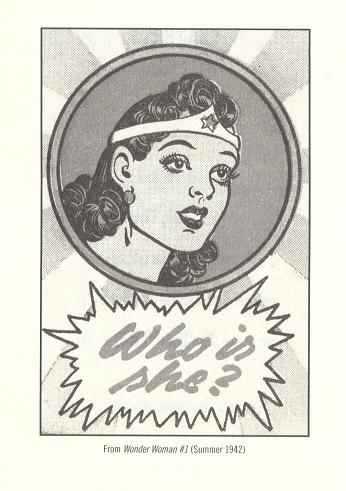
Summer Reading: The Secret History of Wonder Woman

Most of my reading of Wonder Woman in comic books has been limited to the her appearances with either the Justice League or Society titles and the John Byrne run of issues (#101-136) from the mid-1990's. Given that DC Comics recently went through a narrative soft-reboot of their comic book universe, Rebirth, I purhcased the first three issues of Wonder Woman as a means of further broaden the number of cape comics on my monthly pull list.

While I have a stronger background in the hero and her medium than the average New York Times Bestseller's list reader,  I am in no way an expert. Historically, unlike Marvel Comics, DC Comics has not perpetuated the fantasy that every character can be linked back to a single creator (for Marvel, Stan Lee), and DC's lack of a mythic bullpen of recognizable artists and writers can result in a distancing between fanboy, character, and creator. Though not one of it's purposes, The Secret Life of Wonder Woman by Jill Lepore helps to fill in a necessary gap: what was the personal and historic context in which an individual created the first popular female superhero?

Lepore does dynamic things in presenting and developing her subject, resulting in a novel that is equal parts biography, history text and comic book analysis. There are oodles of excellent reviews of the novel (including Dwight Garner's "Her Past Unchained" from the New York Times and "The Freaky, Fabulous, Feminist 'Secret History' Of Wonder Woman" by NPR's Etelka Lehoczky) that eloquently capture some excellent observations regarding the book's strengths and weaknesses. In most cases, reviewers, like I, recommend The Secret Life of Wonder Woman as a worthy summer read.

Even when reading for entertainment purposes, it can be difficult not to occasionally put on my "teacher's hat" while reading. Not surprisingly, this was also the case The Secret Life of Wonder Woman. Reflecting on this analytical angle, in addition to a couple of observations, I've clumsily identified potentially relevant New York State Common Core Learning Standards for English Language Arts & Literacy for future exploration:
  • The research on display is both deep and incredibly accessible, even to those with (I suspect) little interest in comics books or women's history. Interestingly, one anecdote Lepore shares (that is also echoed in a Wonder Woman story--Lepore gives multiple examples of Wonder Woman creator William Moulton Marston's art reflecting his life) illustrates this point. One of the many lessons Wonder Woman imparts upon men, and boys, is the untapped potential for finding excitement in the study of history... especially women's history (224). The Secret Life of Wonder Woman is a fine example of making history interesting. In its entirety, The Secret Life of Wonder Woman is an excellent illustration of standard 1 of the Reading Standards for Informational text (RI) at Grade 11 in Key Ideas and Details: "Cite the textual evidence that most strongly supports an analysis of what the text says explicitly as well as inferences drawn from the text." Reading about and researching topics of greater interest beyond the standard issues-based subjects, might be nice, and this text provides an example of how it can be done in a manner that is engaging.
  • The author objectively presents the lifestyle choices (among them two "wives" and an interest in bondage) made by Wonder Woman creator William Moulton Marston, avoiding the cheap way out by appealing to unnecessary lascivious language. While book reviews for her book seem to emphasize this facet of the story, Lepore highlights these freakier angles on Marston's story in the context of the larger Wonder Woman "origin." The author uses these facts to highlight the reasoning behind some of the creative choices Marston made in developing the character. Lepore's precise use of word choice that is not exploitative woudl be an interesting way to consider standard 4, also in Reading Standards for Informational text (RI) at Grade 11, but in Craft and Structure: #4. "Determine the meaning of words and phrases as they are used ... specific word choices on meaning and tone, including analogies or allusions to other texts."
  • The manner in which Marston's effectively developed and utilized Wonder Woman as his literary voice is explored. It is clear that more than most, writer Marston (and the experiences of he and his family) was Wonder Woman, and that the creator/author had intended to use his character as a vehicle to promote a specific social agenda. A Harvard trained psychologist, and longtime experimenter in social behavior, every aspect of Wonder Woman was crafted through the lens of promoting a specific responses from the reader. When Marston was not the one responsible for writing Wonder Woman her "power" was weakened. There are multiple examples given of how the values and qualities Marston worked to imbue Wonder Woman with are minimized in the hands of other writers. For example, as a member of Justice Society, Wonder Woman is relegated to the role of secretary, not even taken on missions, rather than the social justice warrior Marston envisioned. On multiple levels, this invutes a consideration of writer's craft, or in the language of CCLS RI #6. "Determine an author’s point of view or purpose in a text in which the rhetoric is particularly effective, analyzing how style and content contribute to the power, persuasiveness, or beauty of the text."
As either an entertaining (and informative) summer read or possible class independent read for high schoolers, The Secret Life of Wonder Woman by Jill Lepore is a winner.


Thursday, July 21, 2016

Simpler Poké-times

My stepson Gregory's Poké-binder from 2004 unearthed at last!
Recently, I came across my stepson Gregory's binder containing his Pokémon card collection. The front page consists of a handwritten Table of Contents on which he listed the organization of the cards (by "type" of course). It is in a protective plastic sleeve, as are all of the cards. When I first saw the binder, I thought to myself "Now, here's something to blog about" and began noodling through the possibilities of just what cards to scan and post. I had completely forgotten just how many types of Pokémon there are, and this was back in 2004. It is a very safe bet that the Poké-stable is even more extensive now.

Fire Pokémon circa 2004.
While at a high school graduation party for one of my former students last weekend, talk turned to PokemonGO. At a party of twenty recent high school grads, nearly everyone had an opinion, and most were either glowing in their support ("it's already made more people healthy than Michelle Obama!") or at the very least respectful ("pretty impressive... Pokémon has been out forever!"). For these students, that thinking is not just hyperbole, it is fact. Surprisingly, Pokémon has been a phenomenon for much longer than most suspect, having been part of our cultural zeitgeist since before most of the teens with whom I was celebrating that day were born.

Water Pokémon.
As a forty-seven year old comic book collector, I have had a fairly long association with Poké-stuff, having read translations of the original manga to the extremely fortunate twist-of-fate that had me taking my son and his friend to see Pokémon: The First Movie-Mewtwo Strikes Back (1998). My son's "friend", later became my stepson as I met and fell in love with his mother. (The boys were in pre-school together.) In a weird way, I suppose I owe a significant portion of my awesome life to the desires of two goofy boys to see the frist Pokémon movie on the day it opened (when that concept really meant something).

Grass Pokémon.
My appreciation of these goofy pocket monsters runs deep, but not so deep that I every actually took the time to learn how to "play" with them. For the most part, my kids and I bought the cards because of the cute pictures, shiny colors and the need to "Catch 'Em All". Even now, reviewing the plastic sleeves which speak of "Melting Power", "Energy Jumps", and "Form Changes", I marvel at the mythology these creations are part of (beyond even the Ash-centric television program) and at how little I really know about how these things engage in combat. At our house, Poké-cards rarely fought, just sparked imaginary adventures to be played out in the minds of my children.

Ground Pokémon.
It strikes me that in the not-too-distant future, today's young adults will talk about Pokémon cards the way my father talked about comicbooks. Growing up, he woudl frequently remind my brother and I that "I had the very first issue of Spider-man/Batman when I was in the Army... I wish I'd held onto it!" Some aging hipster will operate under the misconception that her son's college can be fully financed with a mint condition rare Cubone variant or "Special Collector's Item" foil Lugia. Truth is, it is likely at that point that she'll realize the value in the card is not in the monetary reward, but in the memories special one's may evoke.

Psychic Pokémon.
Image with various Pokemon that accompanied my Twitter post!

Monday, July 18, 2016

Roadie: South Street Seaport Museum

The Peking at the South Street Seaport in New York City. (6/19/16)
Friday evening, my wife and I watched In the Heart of the Sea (2015) directed by Ron Howard and based upon the (far superior) novel by Nathaniel Philbrick. Despite lacking the passion of the book, and including some very odd camera angles intended (I think) to suggest some sort of artistic vision, one thing the movie did do very well is to recreate the Essex, the whaling ship that serves as the initial setting. Similar to our shared earlier film experience with Peter Weir's excellent 2003 historical drama Master and Commander: The Far Side of the World, based on Dan O-Brien's novels, much of our viewing of the at-sea scenes were punctuated with comments such as "There is no way I could survive on a ship like that" or "I would definitely puke my brains out!"


It was during these scenes that I recalled we had indeed been on a boat not too dissimilar to that depicted in the movie... well, maybe not really, but it was an older vessel and we had toured it while it was moored to  a pier. Last month while visiting my step-son in New York City, one of the historical sites we found ourselves wandering into (in addition to the National September 11 Memorial and Hamilton Grange) was the South Sea Seaport. While there, we took in the South Street Seaport Museum and one of its display, the Peking. Neither a whaling ship nor war ship, the Peking was "one of the famous 'Flying P Liners'... [e]mployed in the nitrate trade..." The vessel was "made famous by the Irving Johnson film Around Cape Horn which documented her 1929 passage around the southern tip of South America in hurricane conditions." As part of our admission to the museum we were given a fairly self-guided tour of the ship.


Just as with the two aforementioned movies, touring the Peking reminded me how extremely unlikely it would be that I could survive at sea with fifty other people during an extensive voyage. I am more than well-equipped, however to tour interesting museums which permit an up-close experience with real history, a quality the South Street Seaport Museum has plenty of.

Wednesday, July 13, 2016

The Power of Re-visiting Text

Wild Strawberries (1957) is not nearly as "artsy-fartsy" or maudlin as this trailer makes it look... honest!

Each school year, despite the best efforts of our department leadership to clearly inform teachers which novels are assigned to be taught at which of the four grade levels (9 thru 12), invariably teachers will high-jack a text for use a different grade level. Whether out of a passion for a particular title or because they don't feel the obligation to research materials for a novel they have not previously worked with, this is an annual conscious choice on the part of some that results in a completely avoidable bone of contention. While this does create problems (beyond the need to find alternative resources, let's face it, the thematic content of some texts really is more accessible and meaningful to older more experienced students), there is also an opportunity created through this lack of etiquette: the potential for revealing for students the power of a re-visiting a text.
A favorite title from my
youth I look forward to
revisiting this summer.

This idea is even more relatable when considered in the context of movies, a fact I was once again reminded of while re-watching one yesterday. The opportunity to re-visit a text (whether traditional hard copy or film presentation) creates a situation that illustrates the difference between simply reading a book and really READING a book. As teachers and adults, we can appreciate finding new information each time we read a story or novel, or after re-watching a movie. High school students, however, often view the reading expedience as a chore which, once completed, is finished with little necessity to revisit it beyond identifying cited textual evidence for responding to an essay prompt.

VHS box for Federico
Fellini's La Strada (1954).
While an undergraduate English major wa-a-ay back in 1988, I took a film study course entitled "Fellini and Bergman." As a product of an urban Western New York public school system, I had zero familiarity with the idea of watching foreign movies other than those produced by Toho Studios and (badly) re-dubbed in English. A large part of the course requirement consisted of independently watching films outside of class. This task required going to the bowels of the campus library and viewing videotapes at a desk with large headphones on. It was there that I also gained a level of comfort reading subtitles--an underappreciated skill I continue to develop to this day. While at my local public library yesterday, I came across a DVD copy of one of the films I had seen in the library basement, Ingmar Bergman's Wild Strawberries (1954), a film I had last seen 26 years ago.

After finishing the movie this second time, many years later, the difference in the experience was clear. Eighteen year-old me dutifully viewed Bergman's meditation on aging and acceptance, coming to some basic conclusions based in great part on my professor's book explaining the movie's themes, structure and story. Yesterday, 47 year-old me experienced with greater depth (and a stronger personal connection) the philosophical themes such as the value of introspection and the transient nature of human existence. I am also fairly certain that 65 year-old me (fingers-crossed!) will draw even more from a future viewing experience.

Stories, poetry and novels are no different; all benefit from the occasional re-visit, especially after time and experience have filled in some cognitive and emotional gaps. A part of me looks forward to the realization that this year's new crop of budding scholars have somehow been fed a novel that I had intended to teach. Rather than cursing the previous ill-advised professional, I will take advantage of the opportunity and challenge of demonstrating the power of revisiting text. Beyond the additional structural and thematic low-hanging fruit ready to be dropped, I am confident a great connection between the student (reader) and content can be facilitated... and the real magic of literature validated!

Monday, July 11, 2016

2016 Utica Boilermaker 15k

Post-race party at Saranac Brewery in full swing. (7/10/16)
Weather: Showers followed by clearing, 65°F, 90% Humidity, Wind: W @ 8 mph.
Route: Utica Boilermaker 15k
Time (Pace): 1:26.31 (official), 9:17 min/mile.

Pre-Race Observations: Heading out very early this morning to participate in my fourth(!) Utica Boilermaker 15k. Despite being the fourth time I've run the course, and the second consecutive year, I come into this run with my lowest personal expectations. As previously shared, I committed two weeks ago to following through with running it "with" my son. While my son, Jack, has been diligent in training toward this race (as part of a larger effort to complete this first marathon in September), after too many weeks away from formal training, I needed to choose an alternate path to competition.

I have in the past two weeks followed through on my "get fit(-ish) quick" scheme consisting of multiple run-walk "workouts" ranging in distance from 3 to 8 miles with the occasional 3 to 4 mile ez runs mixed in for good measure. As one might expect, there are some challenges with run-walk, th most significant being the necessity of disciplining oneself to adhere to the 3 minute run-1 minute walk schedule, even when feeling as though you could continue on through the entire thing at the run pace after suitably warming up. The need to honor my plan, while maintaining my breathing and mantra has been challenging to do when running alone, and will be even more difficult in the context of 11,000 other folks running the race. I am embracing both the challenge of the new race plan (whcih means accepting a slower finishing time than in years past) and finding the joy in simply participating with my son (who will only be held back if he chooses to stay with me).

An unanticipated added benefit is that my brother happened to be in town this weekend (he lives and teaches in Monterrey, Mexico) and will be making the two-hour drive to Utica with us...

Post-Run Reflections: This was the fourth Boilermaker I have "run," and despite being the slowest time I have put forth, it was the best one I have been part of. Beyond my finishing the course it was great to have have my son run the course for his first time (and doing well) and to have my brother make the trip with us. The logistics of meeting up aside  (FYI: it is not easy to find one person among 13,000 of your closest friends at the post-race party!), celebrating having finished with your family is definitely the way to go.

While waiting in our assigned pre-race starting coral, my son and I talked quite a bit about how incredibly well organized the Boilermaker weekend is. The Utica community once again did a fantastic job making what could have been a nightmare (and what I have experienced as a hug pain in the butt in races of significantly smaller scale), very easy. From parking at the finish to picking up post-race swag, the entire experience was very smooth... and dare I say it, enjoyable!

My run-walk approach, at a ratio of 3 minutes running followed by 1 minute walk, worked well. I did vary slightly at the beginning however. Given the 11,000+ participants, I did need to run the first two miles at a pace of about 8:50--to stop to walk would have been much too disruptive to those around me. By about two miles in, it was much easier to find my way to the outside lane without impeding others. from that point forward I faithfully fell into my desired pattern. (My son, ever the optimist, suggested at the beginning that I could run the whole thing; while true, I reminded him that I needed to "trust my process" despite the impulse to attempt to hang on.) I did need to ficus while walking to resist the cheers from spectators to "keep going, you can do it!" because I sensed to do so woudl result in my ultimately having to walk at the end. In the end, I finished 3,670th of 11,359 15k finishers, which was good enough for 216 of 562 in my 45-49 Male age group, with an official time of 1:26:31 (9:17 min/mile).

Complete results for all Boilermaker Weekend events are searchable HERE.