Showing posts with label movies. Show all posts

Wednesday, December 16, 2020

Winter Movies: James Joyce's The Dead

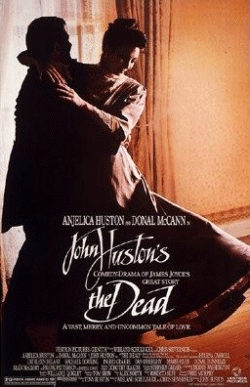
The first snow came early this year in Western New York. Though I may say this every year, for the first time "ever" I was shoveling in the dark in mid-November. This early December morning when I woke up in the dark, it was as I suspected: a light snowfall extending the anticipation of the holiday season had fallen again. Though it was only what amounted to a half inch or so, it was just enough to set the pavement aglow under the street lights. The pre-Christmas snowfall of winter, or more to the point, the apparent magic of it, often brings me back to a short story by Irish writer James Joyce from his collection The Dubliners, and by extension to the 1987 film adaptation of the same story directed by John Huston, James Joyce's The Dead.

The year 1987 was my first as a college undergraduate, and, like many, home from my first semester in December, I felt a sense of invincibility and wonder. It was my first time away from home for an extended period of time, and my first taste of (arrested) adulthood, code for being able to make all the dumb mistakes that first year college students do. This was also a time of little meaningful reflection allowing for the quick dismissal of mistakes with little understanding of what things really meant.

While on break, my brother and I went to a local art house to see The Dead. I was armed with one World Literature course (and the powerful understanding of the literary term "epiphany"), so, of course, I was an expert in artsy-fartsy books and movies. So away we went. For all I really knew at the time, The Dead could very well have been a Victorian era zombie movie, but what I experienced that evening (and much more powerfully so in later viewings) was a moving meditation on insecurity, nostalgia and love.

IMDB describes the film thusly: "Gabriel Conroy and wife Greta attend a Christmas dinner with friends at the home of his spinster aunts, an evening which results in an epiphany for both of them," and despite the seemingly dry set-up its the actors and director Huston who turn the subject matter into compelling viewing. The lead actors, Angelica Huston (Greta Conroy) and Donal McCann (Gabriel Conroy) bring to life the two "literate" characters with performances that are both celebratory (the dinner party) and melancholy (Michael Furey's final romantic gesture).

Those ready for a moving holiday film experience will not be disappointed. For myself, rewatching the film over the years, its themes naturally grow more meaningful to me, just as the feelings at Christmas time become grow more complex. For whatever reason this movie is very difficult to find online, so a public library may be your best bet. Even better yet read the short story in The Dubliners before seeking it out.

Sunday, June 14, 2020

Seen It (Again): The Hired Hand (1971)


Quite a bit of what little time I do spend "watching" television consists primarily of my flipping through service provider menus looking for something (anything!) to watch.  It's been a few years since I last came across it on Netflix, but was happy to see Peter Fonda's directorial debut (and follow-up to his iconic turn as "Captain America" in Dennis Hopper's Easy Rider (1969)), The Hired Hand (1917)turn up on STARZ this past week.

In many ways, this quiet, meandering movie is the perfect palette cleanser for today's loud and obvious cinema. Suggesting Fonda learned from Hopper and cinematographer Lazslo Kovacs while Easy RiderThe Hired Hand retains many of the stylistic flourishes and meditative imagistic qualities that were so uniquely presented in Easy Rider. Overlapping fade-in transitions, languid, poetic montages, and the camera's tendency to patiently follow character interactions--all which stand in sharp contrast to modern film making's sped up shaky cams and "tell me now" storytelling. The Hired Hand was also the first feature for future Academy Award winning cinematographer Vilmos Zsigmond (1977s Close Encounters of the Third Kind), whose ability to capture the spirit of the American Southwest is suggested here.

From the opening scene, a somber, reflective tone is established. Our two protagonists, Harry Collings (Fonda) and Arch Harris (actor Warren Oates, probably best remembered by my generation as Sgt. Hulka in Stripes) are resting by a river as their younger traveling companion, Dan Griffen (Robert Pratt) is seen frolicking in the water. Much is made of Harry's displeasure with Dan's silliness, though he is reminded by Arch that this is likely as the younger man is very much as Harry was in his youth. Arch and Harry two have been traveling the American Southwest together for seven years, and despite making plans to head to California, it becomes clear that Harry is tired of life as a saddle tramp. After catching something on his fishing line (the significance of which is revealed shortly thereafter), Harry decides to change course and return "home" to the wife he left behind to travel with Arch.

Along the way, as often happens in Westerns, the three stop in a dying desert town for a drink and run into some tough locals. When Dan is framed for some unseemly behavior, he stumbles into the hole-in-the-wall bar and drops dead. After exacting some painful revenge on a group of locals for the role in the death of their friend, Arch and Harry skip town. Of course, their actions will come back to haunt them later. If there is an external conflict in the movie, and one complaint about The Hired Hand has been that it lacks a clear narrative, this is it, though it only returns for resolution in the final 15 minutes of the movie.

In The Hired Hand, however, it is the internal conflicts of the two leads, which come to the forefront once the two reach Harry's old homestead and his estranged wife, Hannah Collings (Verna Bloom), is introduced. Still angered and hurt by Harry's withdrawal from her (and their daughter's) life, he convinces Hannah to allow him to stay, not as her husband, but as the hired hand of the film's title. Arch, ever the loyal partner, stays with Harry in order to help his partner repair this damaged relationship. In the end, however, it becomes clear that Harry will need to end his seven-year  relationship with Arch if he is to embrace a new domestic life with Hannah.

Of the things that make The Hired Hand recommended viewing, it is Warren Oates performance as Arch that is foremost. As played by Oates, Arch is the only character that is provided with the opportunity, by virtue of his sincere and honest humor, to develop beyond the somber, sad realities depicted here. Arch has clear affection for those he chooses to include in his life, a quality clearly expressed in his easy going manner with Hannah's daughter, who has lived her life thus far with the understanding that her father is dead.

Aided immensely by Bruce Langhonre's haunting (and critically acclaimed) score and cinematographer Zsigmond's picturesque vistas, The Hired Hand (1971) works best as a character study, albeit one with with some good ol' fashioned gun play thrown in for good measure. An unusual Western that embraces 
(much like fellow neo-Western Easy Rider)  the platonic, romantic relationship between Arch and Harry, it subtly, and beautifully, depicts the strong hold friendship can have on those involved. 

The Hired Hand is an odd movie that rewards carefully viewing (and re-watching). It is also very likely not for everyone, but, if you dig 1970s movies and film-making, or neo-Westerns, I recommend you give it a try.  Once available on Netflix, and now on STARZ, many finer public libraries may also have an old copy waiting on it's shelves waiting to be rediscovered.

Monday, December 16, 2019

Holiday Flick: Smoke (1995)

The story shared by Auggie (Harvey Keitel) to Paul (William Hurt).

As often happens, I have fallen behind--about two-years behind--in posting my Twelve Days of Holiday Movies. Here I sit a week away from Christmas Eve thinking about a movie I first blogged about in 2011. Though as much a "Christmas movie" as the original Die Hard (1988), in my mind it still counts. While the original Mighty Joe Young (1949), and King Kong  (1933) will always be Thanksgiving movies for me, and The Greatest Story Ever Told  (1965) is must-see viewing for Easter season, Smoke, and in particular the closing credits, is must-see Christmas viewing.

Wayne Wang and Paul Auster's Smoke (1995) is one film I make a point to watch during the Christmas season every year since I first saw it. Though not a family film (it's Rated R for language), Smoke is an ensemble piece starring Harvey Keitel, William Hurt, Harold Perrineau, Stockard Channing, and Forrest Whitaker, among others. Featuring multiple converging storylines, it speaks to such relevant holiday themes such as the many faces of redemption, the necessity of finding family and the power of compassion.

Back-in-the-day, Smoke, and it's follow-up Blue In the Face (1995), were frequently advertised as slapsticky, New Yawk comedies (such as on the most common, and goofy, DVD packaging seen here). Promoted with (then) celebrity cigar smokers and an with emphasis on the more humorous moments, this movie, however, has much more going on below the surface. The slipcase designed for release in Asian markets (pictured to the upper left) offers a more evocative (not to mention holiday themed) image.

I can't recall exactly how I first got turned on to this movie, almost twenty-five years ago now, but I do remember buying a VHS copy of it in a supermarket one day on my way to work. At one magic point in our culture, rare and unusual movies could be had on VHS for two bucks as the marketplace was transitioning to DVD. Up until our VHS player went the way of the dodo ten years ago,  I would watch Smoke each year at just around this time. Taken as a whole, Smoke is not easily pigeon-holed as a “holiday film” (which is a good thing), though the values it eschews do seem especially relevant at this time of year.

The final five minutes are most overtly holiday-themed which contributes to its easy selection as a  holiday film, much more so than the aforementioned Die Hard. Originally published as "Auggie Wren's Christmas Story" by writer (and the co-director and screenplay writer for Smoke) Paul Auster (a version of which is available here), the final moments of the film show what is told earlier in the movie. The set-up is this: two of the primary characters, Auggie and Paul, are having lunch. Paul is a columnist who needs to submit an essay to the New York Times for its holiday edition. Auggie (the cigar store owner whose own story is intertwined with those of the other characters) has a story he'll share for lunch. The emotional impact of Auggie’s story is further punctuated by the Tom Wait’s song, "You Dream," which accompanies it.

The story acted out and set to "Innocent When You Dream" by Tom Waits.

Unfortunately, hard copies of Smoke in DVD/Blu-ray are difficult to come by. Nor is it available on Netflix or Amazon Prime for direct streaming. Thanks to the magic your local public library (in my hometown of Rochester, New York, there are two copies for borrowing), Smoke is worth seeking out.

Great stuff, and just one of many evocative scenes from an excellent film.

Friday, December 06, 2019

Comicbook Shelf: Krampus: The Shadow of Saint Nicholas (2015)

From "I" written by Zach Shields and Todd Casey with artwork by Christian Dibari and Mark Spicer.

Not surprisingly, the cover
by Fiona Staples is one
of the artistic high points.
Four Decembers ago, following a media-fueled folk horror-frenzy, this slender, softcover volume found its way to my comic book shelf. Released in concert with the feature length movie Krampus (2015), Legendary Publishing's Krampus: The Shadow of Saint Nicholas shares many of the same qualities that made the film entertaining. This graphic novel features stories crafted with the film's  writer/director Michael Dougherty credit with a "Stories by" credit. While Krampus the movie focuses on a single family's experience with the demon and his minions, The Shadow of St. Nicholas employs an anthology approach to broadened the primary antagonist's impact on a wider range of unrelated characters.

As with other Legendary Pictures/Publishing tie-ins for genre films (see Godzilla: Awakening (2014) and Pacific Rim: Tales from Year Zero (2013)), the formula remains the same here: include the film's original creative talent, in this case Dougherty, to develop ancillary stories that reflect signature elements of the overall narrative of the film. While thematically related to the movie, having seen the movie prior is not necessarily key to its enjoyment.
Krampus' minions are back
in "II" with art by Maan House
and Guy Major.
Given the Krampus character and perhaps Dougherty's affinity for anthology sub-genre, The Shadow of Christmas is successful in accomplishing what the filmmaker says the intention is behind this project in the collection's introduction, "to deepen your [the reader's] love of the character [Krampus]..." Visually, the artist team keeps the best visual component of the movie, the well-realized practical creature designs, in the graphic novel. Each of the four stories, titled as Roman numerals I through IV, are all written by Zach Shields and Todd Casey (Laura Shields is also a credited co-writer on "II"). Each story is grounded in a modern setting familiar to American readers that creates the opportunity for a hint of the "ancient in a modern world" dynamic that worked so well in the movie.

Splash page of Krampus from
"III" by Michael Montenat
and Mike Spicer.
The most polished of the four stories is the first and if each of the four were to be thought of as pitches for a potential Krampus sequel, "I" also makes the most sense. Simply put, "I" is a tale of redemption. A "bad" department store Santa seeks validation by combating the forces of Krampus to protect others who are more worthy than he to live on. The story is a reminiscent of other Twilight Zone-style stories and while offering no real narrative surprises, the professional execution makes for an enjoyable reading experience.

Much of your appreciation if this graphic novel as a whole will depend on your enjoyment of the burgeoning Krampus mythos in modern mainstream media. If, like me, you dig contemporary iterations of archaic folklore, The Spirit of Saint Nicholas is worth seeking out. As a fan of the movie Krampus, recommending this companion piece is easy. The inherent re-readability of a quality anthology makes the $14.99 cover price well worthwhile.

Friday, July 27, 2018

Summer Reading: Logan's Run

Like most 40-50 somethings, the 1976 movie Logan's Run starring Michael York, Jenny Agutter, and Richard Jordan (who also played favorite literary character from Frank Herbert's novel's Duncan Idaho in David Lynch's movie version of Dune (1984)!), was a very important part of my nascent science fiction fandom. Despite being the tender age of 7 at the time, between the film version, Marvel comic book (which ran seven issues in 1977), and equally short-lived television series (14 episodes), Logan and Jessica's search for Sanctuary was a big part of daily neighborhood games of "guns".  (Back-in-the-day, my friends and I would gather with all of our plastic arms, break into groups and simulate life-and-death chases of one-another throughout a three-block radius of our hood... these were very different times.)

Logan's Run #2 cover by comic book legends
cover by George Perez and Al Milgrom.
Recently a summer school colleague stopped to share his excitement at hearing that Logan's Run was once again in the Hollywood hopper for a potential blockbuster remake. After sharing memories of Logan's Runs past, I mentioned that I had heard that the new movie is to be based on the original novel rather than the more familiar iterations. I expressed a desire to read the original novel by William F. Nolan and George Clayton Johnson, but had always had difficulty finding an affordable edition. Later that day he sent me a link to a recent re-release he'd come across on Amazon. Three days later it arrived in my mailbox and I jumped right in...

Released as part of Vintage Publishing's "Vintage Movie Classics" collection of "novels that inspired great films" in 2015, this edition of Logan's Run includes a foreword Daniel H. Wilson as well as publication details for the original novel and the movie adaptation. The differences between the familiar film and the original movie are many, ranging from key characterization to the scope of the world in which the action takes place. The general plot and narrative drive remains the same in all version of the story: in a secretly dystopian future, policeman Logan "ages out" and as a result of first trying to find a mythical utopia ultimately joins another runner in seeking the right to grow old all while being followed by former partner bent on bringing both he and his lady-friend to justice.

Given that the 1976 film is so familiar, the easiest way to share thoughts on the novel are to point out two key differences between the two.
  • In the movie, when characters turn 30 years-old, an event communicated to those around them through the change in color (red to blinking red to black) of the crystal imbedded in the palm of their right hands, they are expected to participate in the Carrousel celebration. During this public display, their lives are extinguished. If one fails to participate, individuals become "runners" who are then targeted by policemen called "Sandmen." The future-cops are tasked with apprehending and killing runners on the spot, thus maintaining the social construct that no one lives past 30. This is actually a pretty significant point of deviation from the novel. In Nolan and Johnson's book, the age of termination is 21, an aspect that better communicates an important part of the novel's world controlled by youth theme. The movement through a prescribed color-themed lifespan is further developed and Logan's personal at each seven year increment are shared via flashback.
  • Just as Logan's backstory, as well as that of the culture he resides in, backstory is more fully developed, the world of the novel is much more expansive. This aspect of the novel is among the more intriguing elements. Rather than quickly moving from the Dome City to Washington, DC, with only a couple stops along the way, in the novel, we follow the runners from Los Angeles to the bottom of the Pacific Ocean and across the United States. I enjoyed the use of actual historical locales like the Crazy Horse Memorial in South Dakota as an important locales. Additionally, the inclusion of robotic Civil War re-enactors in Virginia. These touches gave the story a much broader feel and a clearer American tone. 

It is clear that most of the decisions made in adapting the novel in 1976 were made for budgetary reasons including the hiring veteran actors who could no longer pass at 21 rather than less marketable teen unknowns. For the time, the special effects in Logan's Run (1976) were very impressive, even earning an Academy Award. With the unlimited budget afforded novelists, characters and setting could be much more imaginatively depicted. A prime example is the character Box who controls the icy area called Hell. In the movie, Box is a not-so-menacing chrome robot, in the novel a grotesque combination of machine and human parts.

William F. Nolan and George Clayton Johnson's Logan's Run is a very slight volume, clocking in at a breezy 166 pages. The narrative is presented in a serialized structure using a conversational writing style that includes few creatively modernized words that are easily understandable given their context. As advertised on the back cover, this novel is indeed a "page-turner", and I read a few entertaining hours.

The challenge now would be to track down the two sequels penned by the first's co-writer, Nolan: Logan's World and Logan's Search. Published to coincide with the release of the movie, neither has been re-published since and are only available on E-Bay and Amazon for up to $60 apiece. Until I come across the for a more reasonable purchase price at a used book store or garage sale, I'll need to access the guns game brain of my childhood to envision the further adventures of Logan and Jessica...

Friday, December 30, 2016

Funko POP Goes My 2016

Believe it or not, this collection is small as compared to those of
Funko POP super fans. (12/30/16)
For better or worse, 2016 was the year I further expanded my collecting interests. While I have periodically purchased action figures (dolls!?) in the past, mostly unique or unusual characters, such as Batman's Native American counterpart Man-of-Bats, Lord of the Rings Ent Treebeard and the 2003 Hulk movie's David Banner/Absorbing Man amalgam, I have until 2016 avoided falling into the seductive trap laid by figure lines. My resolve was weakened this past year, as I responded to the siren song of Funko POPs.

If the allure of Funko POPs lies in the diversity of the line, it's strength is in the power of the memories they are capable of evoking. As I am in the collectables sweet spot (40+ years old, male, some expendable income, a fanboy), there are in incredible number of relatable characters. Whether reflecting childhood movie favorites (Flash Gordon), recent superhero comicbook interests (Ms. Marvel, Batgirl), cultural icons (Ghostbusters' Patty Tolan, Mel Gibson as Braveheart), or even literary mainstays (Cthulhu from the stories of H. P. Lovecraft), Funko POPs addresses itches that can be stretched. Like comicbooks and baseball cards, the acquisition of many come with an anecdote.

My first Funko POP Holy Grail: I travelled to multiple Walgreens over the course of
weeks to find this exclusive Ms. Marvel. Kamala Khan is one of the more interesting
comicbook heroes to be introduced in years. Was very excited to come across it in
an urban store I stopped at on a lark. 

A favorite character from a favorite movie, Vultan, played by Brian Blessed,
from Flash Gordon (1980). I was 11 when my brother and I went to see this in
theaters. Purchased this on annual excursions to Nee York City to visit my stepson
at college. It kind of became thing to find a unique Funko POP on each visit. 

The first real collectible based on H.P. Lovecraft's Cthulhu mythos that I wanted was
also the first that I asked my local comic shop to find for me. Though unplanned, it
was also the first "Exclusive". Wish there were more POPs based on "Books" though.

A few months ago, I posted a picture of my POPs on Instagram. A former student wondered
in the comments, "Where are the female POPs?" She was right, at that point I had bought
only characters that were male. Ghostbusters (2016) was a movie I never expected to
like, but I was won over by the performances of the four leads, especially Leslie Jones'
portrayal as Patty Tolan. Jones' own cultural relevance has only continued to grow since.

A gift from my son this past Christmas following last Christmas' Howard the Duck.
Jack and I attended a local Sanders rally in June 2016 when the campaign
ball really began rolling, and I was excited to see his interest in politics develop.

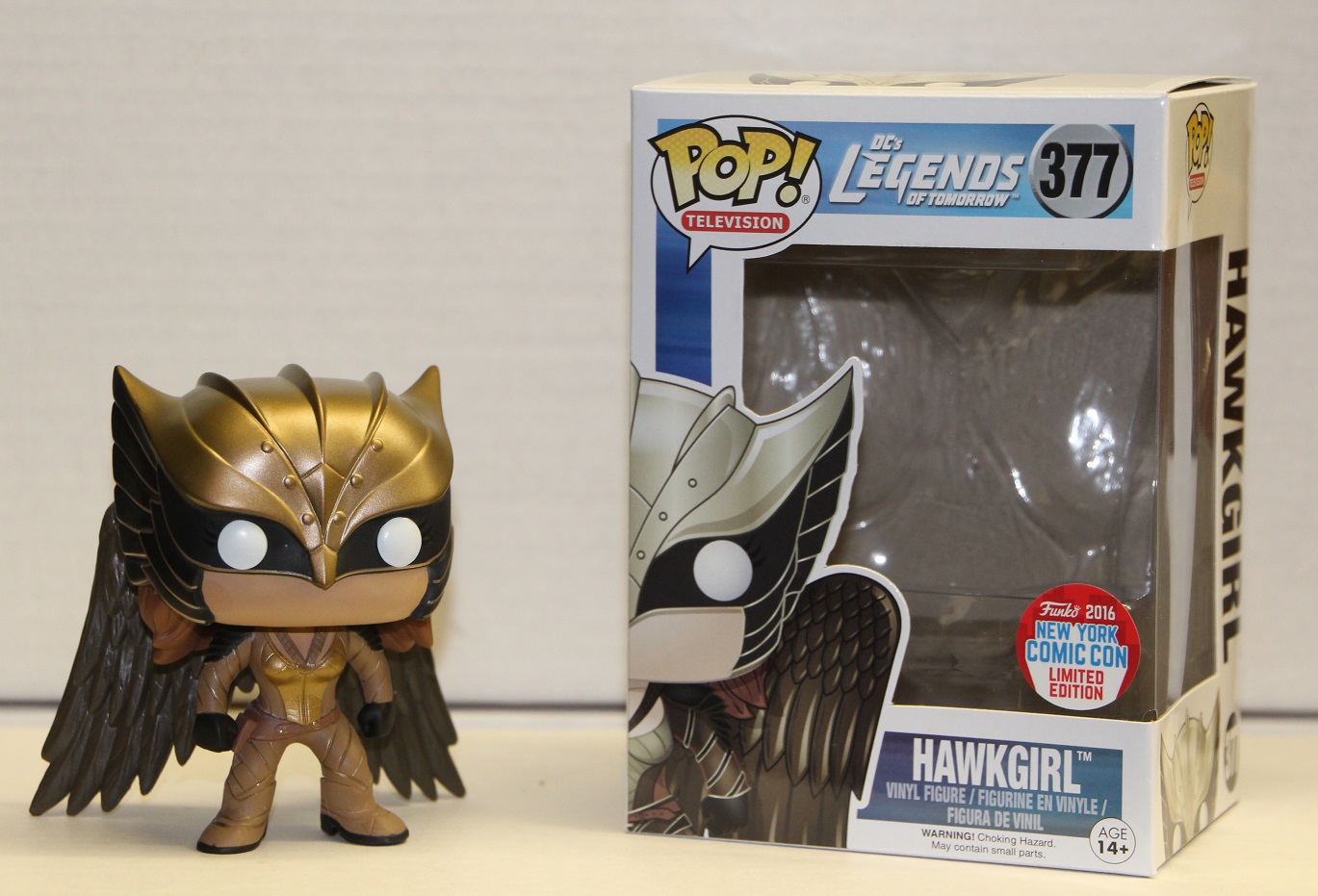
Hawkgirl was an unusual impulse purchase from Barnes & Noble, which by the
way is an excellent source of POPs! I've never seen an episode of DC's Legends
of Tomorrow television show, I do, however, love recent depictions of the
Kendra Saunders Hawkgirl character in DC Comic books over the past ten years.
Also a New York Comic Con Exclusive, an event I have yet to attend but hope to... someday.
Funko POPs tell stories. These 6" figures (and bobbleheads) that prompt me to reflect on semi-important moments in my life as a fanboy and person. To my wife and others who have not embraced the collector's life, it is difficult to explain that these $10 "dolls" are worthy parts of my fandom. As someone who's been doing "this" for 30 years, long before "geek culture" became hip, I dig what Funko is doing with this line and look forward to continue supporting it.

Friday, September 02, 2016

Hallow-Reading: Blair Witch Project (1999)

Panel from "Elly Kedward's Curse" illustrated by Tommy Lee Edwards.
The time-honored practice of comic book-movie tie-ins frequently results in some interesting comci book titles being published. 1999's little-horror-film-that-hit, The Blair Witch Project, built it's artificial mythology in the "real" (and reel) worlds in an unprecedented fashion. While most are familiar with the SciFi (now "SyFy"...ugh) Channel faux documentary, The Curse of the Blair Witch, the development of the story goes much further than many suspect.

Cover to The Blair Witch
Project
#1 (First Printing)
Beyond even the commonplace novelizations that come with popular film releases, there was also a comic book one-shot. Rather than a retelling of the film's story in comic book form, Oni Press' The Blair Witch Project contributes an additional level of mythology to the key characters and events that, while important to its overall narrative, never actually appeared in the first movie.

With anticipation building for the third film in the series, Blair Witch (2016), to be released on September 16, the time seems right to rifle through some long boxes of older comic books in hopes of coming across the copy I knew I had purchased 17(!) years ago when it was first released. Filed nearby another unusual movie tie-in, Oni Press' Ghost Dog: Way of the Samurai (2000) one-shot, I was pleased to see it had not been discarded by my wife.

From "She Needs Me: Coffin Rock"
illustrated by Guy Davis.
This single issue (later followed up by a three issue mini-series entitle The Blair Witch Chronicles) contains three faux-adaptations of Cece Malvey's "Wood Witch Said" journals, "original" pages of which are shared on the last page. The unifying creative thread among these three stories is writer, or the individual hired to  "annotate and adapt" according to the credits boxes, Jennifer Van Meter. In the Foreward on the inside cover, it is revealed that Van Meter was offered the writing assignment by editor-in-chief Jamie S,. Rich because the author likes "weird crap." While not the most normal criteria for matching writer and material, here it works.

The pairing of each individual story with artist is equally impressive. The individual artistic styles of Tommy Lee Edwards, Guy Davis, and Bernie Merault are used effectively to create unique looks for each time period setting. While each of the three artists' styles vary, the common visual element of being inked solely in black and white lends cohesion to the proceedings. This combination of common writer and visual nuance, along with the varying artistic styles create a visual sense of progress that further contributes to a sense of movement through the narrative. Each short story covers Blair Witch background beginning with the origination of the curse and concluding with a glimpse at the Rustin Parr murders that are the precursor to the now iconic final shot of the Blair Witch Project film was derived.

A portion of the detailed appendix from the back
cover. Here, the numerous footnote from throughout
are explained in detail, supplying an even deeper level
of meaning to the Blair Witch mythology.
It has been a few years since I have seen the film (which is currently not available on wither Netflix or Amazon Prime for free streaming), but after reading this comic book I am confident I never watched the film in light of its mythology as fully as possible. A tribute to the story-within-a-story writing of Van Meter, as well as its carefully crafted "authenticity", it was difficult not to begin searching online through the names of the supposed writers and false historical events. Down to its footnotes and annotations, The Blair Witch Project comic book effectively reads like a visual representation of the person whose thinking it is intended to reflect--the educated and increasingly crazy Cece Malvey.

A brief synopsis (cribbed, in small part, from a promotional entry on MyComicShop.com) suggests the historical scope presented in the single comic book issue:
  • "Elly Kedward's Curse" art by Tommy Lee Edwards. In 1785, Elly Kedward was driven out of the Township of Blair in North Central Maryland. A year later, her accusers started disappearing under mysterious circumstances. Fearing Elly had cursed them all, the people of Blair fled, abandoning their town and giving birth to a legend.
  • "She Needs Me: Coffin Rock" illustrated by Guy Davis. In 1886 Burkittsville, a young girl is lured into the woods where she becomes a vehicle for a measure of graphic revenge against the men of the community levied by Elly's spirit.
  • "Left Alone: The Rustin Parr Killings" by Bernie Mireault (BEM). In a more modern setting, loner Rustin Parr is prompted by a voice in his head to kidnap and murder children from the local community. Readers are given insight into Parr;s thinking whcih reveals the familiar "voice" of the Blair Witch's guiding words.
With a new film being released, and one with ties to characters to the first, there is a good chance that the background revealed in this back issue bin survivor may increase one's level of enjoyment of the film. Even if it is not "officially" part of the new film's canon, The Blair Witch Project is both an interesting cultural artifact and an interesting example of well-researched modern myth building. The original single issue one-shot was originally priced at $2.95 and carried a "Mature Readers" label. It is very likely available in the back issue bins of your local comic shop at cover price or can be ordered online,along with other related Blair Witch titles for significantly less than cover price.

From "Left Alone: The Rustin Parr Killings" illustrated by Bernie Mireault.

Monday, July 18, 2016

Roadie: South Street Seaport Museum

The Peking at the South Street Seaport in New York City. (6/19/16)
Friday evening, my wife and I watched In the Heart of the Sea (2015) directed by Ron Howard and based upon the (far superior) novel by Nathaniel Philbrick. Despite lacking the passion of the book, and including some very odd camera angles intended (I think) to suggest some sort of artistic vision, one thing the movie did do very well is to recreate the Essex, the whaling ship that serves as the initial setting. Similar to our shared earlier film experience with Peter Weir's excellent 2003 historical drama Master and Commander: The Far Side of the World, based on Dan O-Brien's novels, much of our viewing of the at-sea scenes were punctuated with comments such as "There is no way I could survive on a ship like that" or "I would definitely puke my brains out!"


It was during these scenes that I recalled we had indeed been on a boat not too dissimilar to that depicted in the movie... well, maybe not really, but it was an older vessel and we had toured it while it was moored to  a pier. Last month while visiting my step-son in New York City, one of the historical sites we found ourselves wandering into (in addition to the National September 11 Memorial and Hamilton Grange) was the South Sea Seaport. While there, we took in the South Street Seaport Museum and one of its display, the Peking. Neither a whaling ship nor war ship, the Peking was "one of the famous 'Flying P Liners'... [e]mployed in the nitrate trade..." The vessel was "made famous by the Irving Johnson film Around Cape Horn which documented her 1929 passage around the southern tip of South America in hurricane conditions." As part of our admission to the museum we were given a fairly self-guided tour of the ship.


Just as with the two aforementioned movies, touring the Peking reminded me how extremely unlikely it would be that I could survive at sea with fifty other people during an extensive voyage. I am more than well-equipped, however to tour interesting museums which permit an up-close experience with real history, a quality the South Street Seaport Museum has plenty of.

Wednesday, July 13, 2016

The Power of Re-visiting Text

Wild Strawberries (1957) is not nearly as "artsy-fartsy" or maudlin as this trailer makes it look... honest!

Each school year, despite the best efforts of our department leadership to clearly inform teachers which novels are assigned to be taught at which of the four grade levels (9 thru 12), invariably teachers will high-jack a text for use a different grade level. Whether out of a passion for a particular title or because they don't feel the obligation to research materials for a novel they have not previously worked with, this is an annual conscious choice on the part of some that results in a completely avoidable bone of contention. While this does create problems (beyond the need to find alternative resources, let's face it, the thematic content of some texts really is more accessible and meaningful to older more experienced students), there is also an opportunity created through this lack of etiquette: the potential for revealing for students the power of a re-visiting a text.
A favorite title from my
youth I look forward to
revisiting this summer.

This idea is even more relatable when considered in the context of movies, a fact I was once again reminded of while re-watching one yesterday. The opportunity to re-visit a text (whether traditional hard copy or film presentation) creates a situation that illustrates the difference between simply reading a book and really READING a book. As teachers and adults, we can appreciate finding new information each time we read a story or novel, or after re-watching a movie. High school students, however, often view the reading expedience as a chore which, once completed, is finished with little necessity to revisit it beyond identifying cited textual evidence for responding to an essay prompt.

VHS box for Federico
Fellini's La Strada (1954).
While an undergraduate English major wa-a-ay back in 1988, I took a film study course entitled "Fellini and Bergman." As a product of an urban Western New York public school system, I had zero familiarity with the idea of watching foreign movies other than those produced by Toho Studios and (badly) re-dubbed in English. A large part of the course requirement consisted of independently watching films outside of class. This task required going to the bowels of the campus library and viewing videotapes at a desk with large headphones on. It was there that I also gained a level of comfort reading subtitles--an underappreciated skill I continue to develop to this day. While at my local public library yesterday, I came across a DVD copy of one of the films I had seen in the library basement, Ingmar Bergman's Wild Strawberries (1954), a film I had last seen 26 years ago.

After finishing the movie this second time, many years later, the difference in the experience was clear. Eighteen year-old me dutifully viewed Bergman's meditation on aging and acceptance, coming to some basic conclusions based in great part on my professor's book explaining the movie's themes, structure and story. Yesterday, 47 year-old me experienced with greater depth (and a stronger personal connection) the philosophical themes such as the value of introspection and the transient nature of human existence. I am also fairly certain that 65 year-old me (fingers-crossed!) will draw even more from a future viewing experience.

Stories, poetry and novels are no different; all benefit from the occasional re-visit, especially after time and experience have filled in some cognitive and emotional gaps. A part of me looks forward to the realization that this year's new crop of budding scholars have somehow been fed a novel that I had intended to teach. Rather than cursing the previous ill-advised professional, I will take advantage of the opportunity and challenge of demonstrating the power of revisiting text. Beyond the additional structural and thematic low-hanging fruit ready to be dropped, I am confident a great connection between the student (reader) and content can be facilitated... and the real magic of literature validated!