Monday, January 09, 2017

Read It: The Lone Ranger Rides North (1946)

This edition includes the erroneous character creator credit of the Lone Ranger 
to radio station manager George Trendle. Some of the basic ideas were his,
but were fleshed out to great success by Fran Striker.
Recently, I spent nearly six hours in a hospital waiting room as my mother underwent back surgery. With all the class papers graded, I turned to the pile of books I have been periodically reading on-and-off for (what turns out to be) a ve-e-e-ry long time. One book in particular provided an opportunity to escape the waiting room and travel back to those thrilling days of yesteryear...

This volume is easy to find online
at a very affordable price, though I
went to Berkeley, CA, to get mine.
Three summers ago, while visiting my best friend in California, we found ourselves in an independent used bookstore in Berkeley. There I came across an old volume entitled The Lone Ranger Rides North written by Fran Striker. Despite being a Western New Yorker myself, I had little prior understanding that Striker was not only from nearby Buffalo, New York, but was also the creator of both the Lone Ranger and the Green Hornet. Given the volume's slight price, and as a fan of both the character's classic Clayton Moore iteration (the one I, like most, are best acquainted with) as well as it's modern Dynamite comicbooks' version, it was a purchase that could not be resisted.

Published in 1946, The Lone Ranger Rides North is comprised of thirty chapters in which are developed three storylines, which when combined, read very much like one of the Clayton Moore's 169 episodes (or the 52 made with replacement Ranger John Hart). It is easy to envision these stories as some that were ultimately serialized for either radio or television. Present in the story are the familiar plot points of traditional Hollywood cowboy heroics: slick, smooth talking criminals, kind-hearted regular folk put in danger and in need of rescue, and our masked hero needing to clear his own name from the nefarious deeds committed by another.

The interesting reveal in this novel for fans is the introduction of a young boy named Danny who idolizes and feels a connection to the Lone Ranger. Long time Lone Ranger fans will recall that "Danny" is actually Dan Reid, the Ranger's long lost nephew whom he believed dead. In modern Ranger stories, including the recent box-office failure Gore Verbinski's The Lone Ranger (2013), Danny is such an integral part of our hero's origin that the reader likely connects the dots earlier than the novel's original audience. This Lone Ranger is much more mysterious here with only the most common characterization traits, including his faithful companion Tonto and their trusty steeds, in tact. Freed of the contemporary necessity for explanation of every single, minute facet of a character's background, the hero of The Lone Ranger Rides North draws much of his strength from his mysterious background. Here, he is a force of good who does not need the humanizing relationship of extended family to elicit the support of the reader.

Given Striker's professional training as a radio theater writer, the storytelling approach is dialogue heavy with most exposition taking place at the beginning of each chapter. Our narrator is so extremely third person omniscient that he frequently (and with language bordering on melo-drama) takes the reader into each character's head to reveal feelings that might otherwise be reflected in the voices of actors delivering the lines. For example, maudlin lines such as the one below saying of Danny that "there were tears in his eyes--tears of pride and gratitude" would be cringe worthy if not for the proper historical context. In 1946, in a story about the heroic Lone Ranger, this time of syrupy language seems somehow appropriate in a tale of "the resourceful masked rider of the plains."

The Lone Ranger Rides North (1946) by Fran Striker is readily available online for less than $10, a more-than-worthwhile purchase for Ranger and fans of Americana alike.

Saturday, January 07, 2017

2017 Winter Warrior Half Marathon

Weather: Mostly Cloudy, 21°F (9°F), 54% Humidity, Wind: W @ 11 mph.
Route: Winter Warrior Half Marathon
Time (Pace): 1:52.02 (gun) 1:51.28 (official), 8:27 min/mile


Pre-Race Observations: Same location as last year's Winter Warrior, but significantly cooler temps. Whereas last January, we were working with a balmy 47°F, at the 4 p.m. start tonight, the temperature is forecast to be about 21°F with a "real feel" of about 9°F! Though I don't mind these conditions too much for running (especially after the first mile or two, it does make for a rather uncomfortable spectator experience, which brings me to the another difference from last year's run, Anne will be staying home. It will be cold and I will be running for up to two-and-a-half hours during which time she would be sitting in the car. Her logic is sound for staying home and I don't blame her in the least.

This afternoon's race is a flat, fast, "loop course," as seen in last year's route scouting trip. I may be past any huge performance breakthroughs, but I am planning to finish with a smile and break 2:00, slower than last year, but respectable given the training I have been doing.

Post-Run Reflections: It was definitely colder than last year (note the icicle-snot-stache!), but other than the temps, and a Westerly wind, conditions were excellent. No precipitation (even in the days leading up to the event) meant there were no issues with footing, always a good thing. As was the case last year, I was fortunate to tie my tale to some good runners with whom I was able to pace myself to a good performance. I went out, and maintained, a comfortable pace throughout finishing in 1:51.28, a difference of about 6 seconds per mile off last year's time.

After having the medal placed around my neck and fetching water (the paper cup needed to be gently crushed to break the ice that had formed on the water's surface), I hustled home. I was excited to share my feeling of accomplishment with  to celebrate with Anne. I learned quite a bit during my experience tonight, from maintaining form, evening overall pace and maintaining breathing cadence. And I confirmed for myself that I am still capable of a solid effort with the right mindset and planning (however quickly thrown together.

Individual results for the event from our friends at Yellowjacket Racing are available HERE.

Saturday, December 31, 2016

2016 Running Reflections

My twin brother, son, Jack, and I following the 2016 Utica Boilermaker 15k in July.
During the build up to New Year's Day tomorrow, many of my friends on Facebook and Twitter have been posting some pretty impressive annual running accomplishments. Whether cumulative mileage (1900 miles!) or number of competitive races, I continue to be impressed by the dedication and training acumen of those within my local running community. While I have always had an awareness of the commitment of local runners, the quantifying of performance that comes with year-end reflections makes concrete that which I have always suspected.

My wife, Anne, and I immediately
following the 2016 Winter Warrior
Half Marathon.
My own numbers for 2016 are less impressive, but I remain very proud of the small achievements I have accomplished. My cumulative mileage (including training and "racing") comes to just over 427 miles, the majority of which were accrued during roughly 30 weeks of training. I ran in only six races this year, covering a wide range of distances ranging from a 5k to two half marathons. It is interesting to note that I started the year with the 2016 Winter Warrior Half Marathon in January and concluded with the Reindeer Run 5k just three weeks ago. In between I revisited a few old favorites (such as my fourth Utica Boilermaker 15k) and found some challenges to embrace, like my first Phelps Sauerkraut 20k.

Although there was a lack of PR (Personal Records) performances for me in 2016, it was the most enjoyable year running I have had in many years. Having the opportunity to go to events with members of my family made the race experience much more satisfying. Whether spectating or running it was motivational to know I had someone with whom to celebrate the finish with.

In 2017, I'm looking forward to continuing the "something old/something new" balance struck in 2016. I will be returning to give the Winter Warrior another go (with slightly slower expectations) next weekend, and Jack and I have signed up to run a new (to us) half marathon together. After 10+ years, I am still learning more about running. The challenge of refining my training in light of other responsibilities (teaching, coaching, falling) has me excited to try some new things this year with a more intentionally consistent approach.

My stepson, Gregory, and I prior to the 2016 Webster Turkey Trot.

Friday, December 30, 2016

Funko POP Goes My 2016

Believe it or not, this collection is small as compared to those of
Funko POP super fans. (12/30/16)
For better or worse, 2016 was the year I further expanded my collecting interests. While I have periodically purchased action figures (dolls!?) in the past, mostly unique or unusual characters, such as Batman's Native American counterpart Man-of-Bats, Lord of the Rings Ent Treebeard and the 2003 Hulk movie's David Banner/Absorbing Man amalgam, I have until 2016 avoided falling into the seductive trap laid by figure lines. My resolve was weakened this past year, as I responded to the siren song of Funko POPs.

If the allure of Funko POPs lies in the diversity of the line, it's strength is in the power of the memories they are capable of evoking. As I am in the collectables sweet spot (40+ years old, male, some expendable income, a fanboy), there are in incredible number of relatable characters. Whether reflecting childhood movie favorites (Flash Gordon), recent superhero comicbook interests (Ms. Marvel, Batgirl), cultural icons (Ghostbusters' Patty Tolan, Mel Gibson as Braveheart), or even literary mainstays (Cthulhu from the stories of H. P. Lovecraft), Funko POPs addresses itches that can be stretched. Like comicbooks and baseball cards, the acquisition of many come with an anecdote.

My first Funko POP Holy Grail: I travelled to multiple Walgreens over the course of
weeks to find this exclusive Ms. Marvel. Kamala Khan is one of the more interesting
comicbook heroes to be introduced in years. Was very excited to come across it in
an urban store I stopped at on a lark. 

A favorite character from a favorite movie, Vultan, played by Brian Blessed,
from Flash Gordon (1980). I was 11 when my brother and I went to see this in
theaters. Purchased this on annual excursions to Nee York City to visit my stepson
at college. It kind of became thing to find a unique Funko POP on each visit. 

The first real collectible based on H.P. Lovecraft's Cthulhu mythos that I wanted was
also the first that I asked my local comic shop to find for me. Though unplanned, it
was also the first "Exclusive". Wish there were more POPs based on "Books" though.

A few months ago, I posted a picture of my POPs on Instagram. A former student wondered
in the comments, "Where are the female POPs?" She was right, at that point I had bought
only characters that were male. Ghostbusters (2016) was a movie I never expected to
like, but I was won over by the performances of the four leads, especially Leslie Jones'
portrayal as Patty Tolan. Jones' own cultural relevance has only continued to grow since.

A gift from my son this past Christmas following last Christmas' Howard the Duck.
Jack and I attended a local Sanders rally in June 2016 when the campaign
ball really began rolling, and I was excited to see his interest in politics develop.

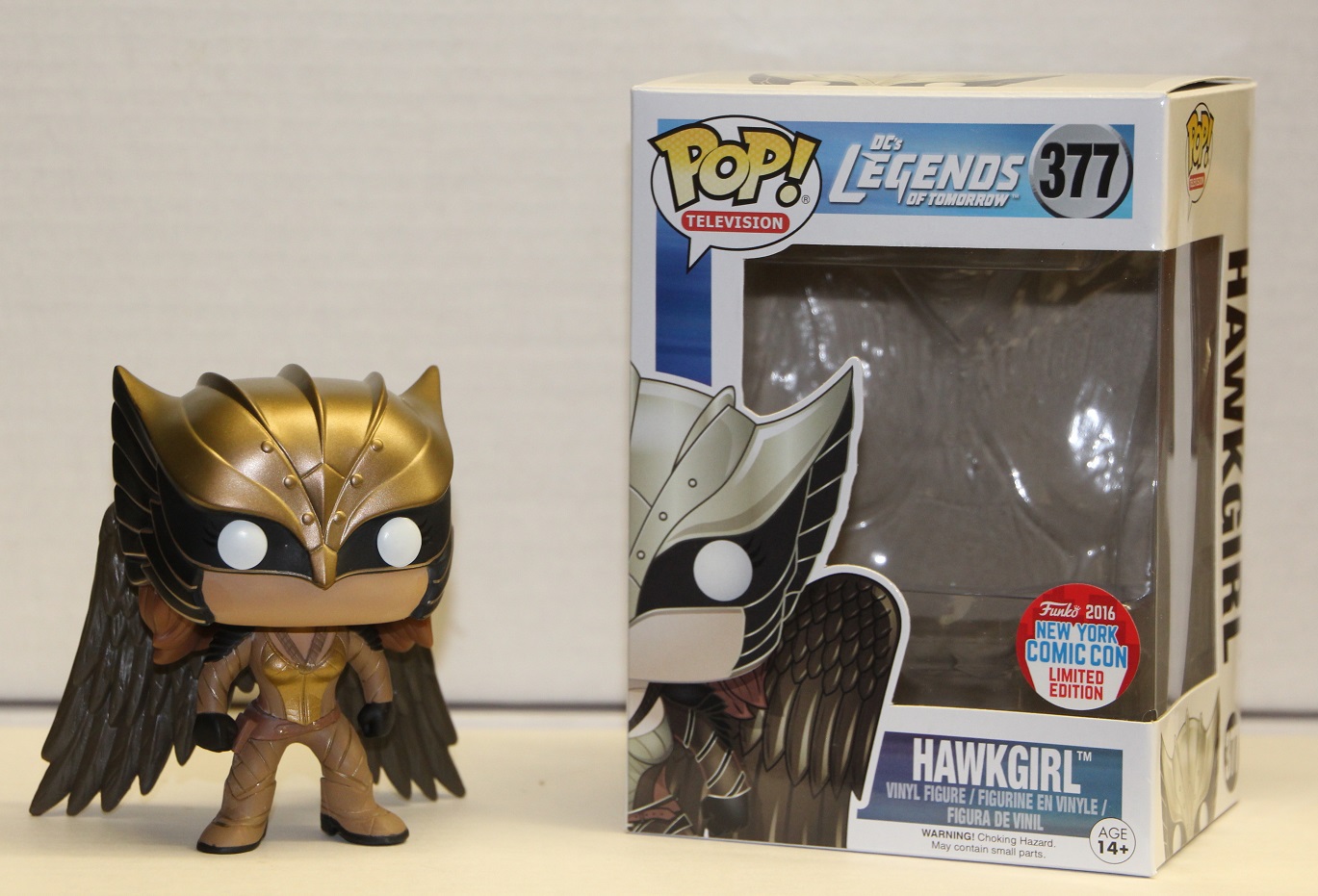
Hawkgirl was an unusual impulse purchase from Barnes & Noble, which by the
way is an excellent source of POPs! I've never seen an episode of DC's Legends
of Tomorrow television show, I do, however, love recent depictions of the
Kendra Saunders Hawkgirl character in DC Comic books over the past ten years.
Also a New York Comic Con Exclusive, an event I have yet to attend but hope to... someday.
Funko POPs tell stories. These 6" figures (and bobbleheads) that prompt me to reflect on semi-important moments in my life as a fanboy and person. To my wife and others who have not embraced the collector's life, it is difficult to explain that these $10 "dolls" are worthy parts of my fandom. As someone who's been doing "this" for 30 years, long before "geek culture" became hip, I dig what Funko is doing with this line and look forward to continue supporting it.

Wednesday, December 28, 2016

Gone Solar

Cells soaking in late-December rays. (12/26/16)
For as long as we have lived at our current home, my wife and I (well, mostly my wife) have maintained a vegetable garden from which we harvested multiple varieties of tomatoes, greens and other vegetables. Over a decade ago, my sons and I built our first composting pit with chicken wire in the backyard. Since that time we have added a smaller enclosed pit for wet waste before ultimately joining a community composting service. Two years ago, my wife leased a Volt after many satisfied years with the Prius. For a number of years now, my wife and I have discussed the possibility of having our home equipped with solar panels.

The next step seemed clear.

Our roof from a side street pre-installation. (11/15/16)
This past September, we met with contractors and received estimates and information about having a solar electric system installed as an end-of-year home improvement project. Just prior to Thanksgiving, we took the plunge and by mid-December, with the i's dotted and necessary permits acquired, our cells began collecting solar power and converting DC to AC through our basement inverter. (Full discloser: I am most definitely not entirely conversant in the ins-and-outs of the tech, so have chosen to use information from a FAQ page on Invictus Electrical's website for this post.)

c
Racking for solar panels installed. (11/29/16) 
Moving forward, the Photovoltaic, or PV system, will convert sunlight directly into electricity serving a portion of our home’s electrical needs. The PV system is connected to our home’s electrical service panel to supplementing the existing utility service. After an inspection by our local municipality, a secondary meter called a net meter was installed for tracking the balance of energy used in contrast to that generated by the cells. Because we have a Southern-facing rooftop with no buildings and trees obstructing the cells, our PV system will work for us anytime the sun is shining. When the PV system is generating more electricity than our home is using, we will receive a credit for the excess power our utility.

Twelve panels installed and catching rays. Note that the angle of the sun is
such that the neighboring tree does not obstruct the cells. (12/26/16)
"Sunny Boy" the inverter, all moved and ready to rock in the basement.
Net meter installed! (12/26/16)
I often tell my own students that I regret not having paid better attention in high school and college science classes as my basic understanding of the science behind the technology is spotty at best. Fortunately, I have my wife to point me to sources to fill in the gaps as we continue to modify and adapt our home around us, and adventure which continues...

Saturday, December 17, 2016

2016 Reindeer Run

At the start of the 2017 Reindeer Run!
Weather: Flurries, 20°F (Feels like 9°F), 100% Precipitation, 81% Humidity, Winds SSE @ 10 mph.
Route: Reindeer Run 5k in Downtown Rochester, NY
Time (Pace): 26:34, 8:33 min/mile.

Pre-Race Ruminations: Woke up early,even for me on a weekend, and was a little glad that the wintry, cold weather of the past few days had not yet dissipated. Warmer temps in the forecast means slippery roads and for today's 5k, that would be an unnecessary addition to what is likely to be challenging conditions.

I've been back at running consistently for the past week, hopeful to run today's fun, holiday run pain free and with an eye toward the Winter Warrior Half Marathon in 3 weeks(!). Training this week has been slow but exhilarating as the primal weather conditions have made for exciting mental play mid-run. As with event road races, I'm setting out solo, with a book to keep me company before the start. One of the freeing aspects of running against only oneself is the sense of calm and the ability to embrace the "adversary": myself.

Feeling Rudolph, but
looking Krampus post-race.
Post-Run Reflections: Just before the race, YellowJacket Racing announcer said, "For those of you running the Winter Warrior Half Marathon, you're welcome!" I suspect that if the weather is as "seasonal" in January as it was today. those of us running will be appreciative of this practice. The 3.2 mile Reindeer Run course, whcih ran through city streets, river walks and access roads was fairly well-maintained but did include the usual challenges to be expected in December. Standing snow covering the occasional icy patch, slushy build-up, and fresh cover made for a challenging, but enjoyable surface. Definitely not a PR day, also accurately suggested by Ellen pore-race, it was am invigorating engagement with the elements.

I succeeded in both fiinsihing the run with a smile, albeit a chilled one, and with relatively little discomfort (need to get some warmer socks!). In the past weeks I have re-discovered the joys of winter running--any ahces that do exist due to wear-and-tear are much less noticeable in the colder temps and the necessity of focusing on footstep and surface ameliorates any mental energy spent considering tweaks and stings.

As an added bonus to this morning's run, I am looking forward to an hour of Western New York cross-training (translation: shoveling) when I get home! The Currier & Ives appearance of our recent winter blasts has made it much easier to romanticize (and therefore psychologically "deal with") what is shaping up to be a much more brumal season than the recent past.

Saturday, October 15, 2016

Run Reader: Dark Ages (2014)

Capatin Hawkherst makes first contact in issue 1 of Dark Ages.
Long a sucker for genre mash-ups in both movies and comic books, Dark Horse Comics' 2014 four issue mini-series Dark Ages nicely scratches the itch by bringing together two of my fave genres, science-fiction and medieval action. Unaware of the title when it was originally published, I first came across Dark Ages on the back issue rack on a rare low new-release Wednesday.

Cover to issue 2 by
series artist
I.N.J. Culbard.
The creative team behind another excellent genre blending project, Vertigo's The New Deadwardians, writer Dan Abnett (of Marvel's Guardians of the Galaxy comic renown) and artist I.N.J. Culbard once again bring well-researched comic book action to the table. Set in 1333 Europe, an age during which God is feared and the violent skills of sell-swords are in demand, Dark Ages follows the conflict between medieval warriors come face-to-face with "demons." The twist is that the demons are not from Hell, as our character's assume, but rather alien invaders from space.

Utilizing a shifting pair of protagonists, Captain Hawkherst and his second in command, "Lucifer" Galvin, Abnett quickly establishes the world wary nature of our heroes. As Hawkherst explains, the group move from battle to battle thereby embracing the violence of their time as "A dark age [like] that will keep us fed and in steady employment. We would prosper in such an age." While Hawkherst hopes to respond to a potentially lucrative call-to-arms from French royalty, an impromptu invasion from outer space, ultimately set in an austere monastery comes calling first.

The conflict is ultimately joined on both sides by unique characters each reflecting clever twists on common genre tropes. The order of silent monks who populate the monastery are revealed to be harboring a secret understanding of what is happening, dead "rise" in support of the invading "devils," and an unlikely robotic ally (who also shares a name with an angel) keeps the proceedings fresh as all move toward a climactic final confrontation.

I.N.J. Culbard's clean and colorful artwork is very reminiscent of the style often employed to great effect in many of Dark Horse's Mignola-verse titles such as B.P.R.D and Lobster Johnson. In Dark Ages, the artwork helps to ground the intergalactic-medieval characters. After working similarly with the aforementioned New Deadwardians, Culbard, is one artists whose work I would add to my pull list sight unseen--there is a fun energy in his engaging style despite some occasionally heavy or morbid content.

Though some of the elements it chooses to mash-up, Dark Ages is incredibly well-executed and work as a self-contained action adventure sci-fi tale. Revolutionary twist and tuns are not always necessary. As a reader, sit is often enough to be drawn into a story well told (and drawn) with just enough variations on a standard (non-standard) story. Dark Ages is very likely still available in my preferred format (single issues) on your local comic shops' back issue rack in addition to being offered as a trade paperback through larger vendors.

From Dark Ages #3, the "angel" Aphrael explains to "Lucifer" their
 circumstances using spiritual tropes a sci-fi context.

Captain Hawkherst retruns, with cyber-enhancements, for the series' big finale.

Friday, September 30, 2016

Reviewing the Old Ways the Old Way

Original box for Gary Synder's audio book The Practice of the Wild (1991).
Despite his voice being a touch higher than I recall, perhaps due to the tape being too tightly wound on a long undisturbed cassette, The Practice of the Wild cassette book is very much how I recall the poet sounding back in 1991 when I heard him speak at Nazareth College. At least I think it was Nazareth College. While cleaning out the attic a few weeks ago, I came across a small collection of books-on-tape that I purchased shortly after  graduating from college with my undergraduate degree in English Literature/Secondary Education. Among them was the aforementioned double cassette. In an age of digital sound, listening to the tapes took a little effort, especially as we, like most American homes, have converted everything to CDs and digital download. After procuring my late father's Walkman, I was ready to take another walk in the woods...

Like many college English Literature majors, I was introduced to the work of Gary Snyder in an introductory poetry course, and as a young man growing up in an urban neighborhood attending Catholic elementary school, the content and perspective was exotic and new. At the time, I had not traveled beyond the freeway connecting our home to my relatives' outside Pittsburgh, Pennsylvania, and the idea of anyone espousing a belief system outside a Judeo-Christian one was unfamiliar to me. Snyder's poetry then was a gateway to the larger school of thought he represented and further (if not a touch more concretely) articulated later in a number of essay collections. If the earlier Earth House Hold (1969) or Myths and Texts (1960) appealed to the revolutionary spirit most moderately embrace in undergraduate studies, the nine essays that comprised The Practice of the Wild spoke to the adult domesticity I found myself accepting as a parent shortly after graduation.

The Practice of the Wild (1991) double cassette runs 3 hours and is a traditional book on tape in that its contents reflect those of the original text, published a year earlier in 1990. Having the text read by Snyder lends an added sense of gravitas and nobility to the its already comforting and airy message. In many ways, my experience to listening to Snyder's verbally share his work is reminiscent of listening to classic music on the way  to work with my untrained ear. Both are incredibly comfortable auditory experiences that establish an educated yet grounded mood. On rare occasions some small understanding is revealed to me as the recipient.

Much like a film with many quotable lines, The Practice of the Wild has many phrases and sayings that since its initial publication have become popularized as inspirational quotes, such as “With no surroundings there can be no path, and with no path one cannot become free.” Also like a quality movie with many good lines, the parts are even stronger when taken as part of a whole. The tape (and book) both add depth and meaning to Snyder's personal philosophy of compassion for all sentient beings, a class in which he includes mountains, trees and water. Key to continuing to foster and nurture this relationship with all beings is allowing our language to grow and develop in a manner that suggests the interdependence necessary for survival. "Wild," "nature," and "place" are just three of the words that Synder's clarification of within the context of his environmental politics, serve as common entry points for those unfamiliar with his thinking. As someone who is superficially aware--and deeply appreciative of--Snyder's work, I find myself always in need of a re-engagement with his brand of deep ecology. This rewiring of our linguistic present is just a precursor to what Snyder hopes will blossom into a radical restructuring of modern living in accordance with his ideas.

I seem to recall having seen a more current version of The Practice of the Wild text with the audio book included, but was unable to find it on line. Fortunately, Snyder is such a beloved literary-cultural figure that many of his speaking appearances and interviews have been capture on video and are available for viewing on YouTube. If unable to find the book-on-tape, you could do much worse than spending a few minutes with Gary Snyder at Colorado College in 2015. 

Tuesday, September 06, 2016

Roadie: FDR Presidential Library & Museum

The FDR Presidential Library & Museum located in Hyde Park, New York. (9/3/16)
On Labor Day weekend, my wife and I once again made our way to New York City. Four years ago it was an anxious train ride to deliver my stepson to Columbia University for his freshmen year; this year, his final one as an undergraduate, was a much different trek. Having spent the summer in New York City, the majority of his belongings were already there, and rather than escorting him to campus, as he departed our home in Rochester, my wife and I left by car. When he arrived in town to settle in in on Saturday afternoon, we were arriving in Poughkipsee, New York, for some sightseeing before taking the train to visit the following day.

At this point Gregory really doesn't require much help moving, but we wanted to see his new dorm and decided to make a weekend out of it. Having Gregory go to college in New York City has provided Anne and I with many opportunities to visit a number of the historical sites in and around New York City, and this final September journey was no different--except that we were not solely in Gotham.

A National Historic Site, The Frederick Delano Roosevelt Presidential Library and Museum, operated by the National Park Service, is located on the grounds of Springwood, the Roosevelt family estate in neighboring Hyde Park, New York. With Poughkipsee only a manageable two-hour train ride from New York City, its location was ideal as a base of operations for a day trip to the FDR National Park prior to heading to NYC. We would have liked to have spent more time in Hyde Park, as the four hours we did spend visiting was only enough to see a small part of the park's offerings. The library was built under the President's personal direction in 1939-1940, and dedicated on June 30, 1941. It is one of the thirteen presidential libraries under the auspices of the National Archives and Records Administration.

Close-up of FDR bust outside museum. (9/3/16)
Given their four terms in office, it is not suprising how quotable
President Roosevelt and his wife turned out to be.


Not a recreation, but FDR's working study in the museum during his life. (9/3/16) 


The President's desk from his time in the Oval Office. (9/3/16)

Busts of FDR and Eleanor Roosevelt welcome visitors to the museum. (9/3/16)
Picturesque park land immediately outside the museum. (9/3/16)
Looking back through these images from our visit to the FDR Presidential Library and Museum, I am struck by how poorly they reflect how incredibly entertaining and educational this historic site is. As someone with not nearly as deep an understanding of U.S. history as he should, while visiting places I am often more focused on taking the displays in than capturing the experience on "film". In addition to the few displays seen above, there are also six-minute films for viewing prior to each section of the museum. Each included archival footage and were thoroughly engaging. Ranging from FDR's childhood and early political life to an exploration of his lasting influence on the world, narrated by President Clinton, taken as a whole they provided wonderful context and background.

When we met Gregory the following day in New York City, both Anne and I highly recommended that he take some time to visit the FDR Presidential Library and Museum in Hyde Park.

Friday, September 02, 2016

Hallow-Reading: Blair Witch Project (1999)

Panel from "Elly Kedward's Curse" illustrated by Tommy Lee Edwards.
The time-honored practice of comic book-movie tie-ins frequently results in some interesting comci book titles being published. 1999's little-horror-film-that-hit, The Blair Witch Project, built it's artificial mythology in the "real" (and reel) worlds in an unprecedented fashion. While most are familiar with the SciFi (now "SyFy"...ugh) Channel faux documentary, The Curse of the Blair Witch, the development of the story goes much further than many suspect.

Cover to The Blair Witch
Project
#1 (First Printing)
Beyond even the commonplace novelizations that come with popular film releases, there was also a comic book one-shot. Rather than a retelling of the film's story in comic book form, Oni Press' The Blair Witch Project contributes an additional level of mythology to the key characters and events that, while important to its overall narrative, never actually appeared in the first movie.

With anticipation building for the third film in the series, Blair Witch (2016), to be released on September 16, the time seems right to rifle through some long boxes of older comic books in hopes of coming across the copy I knew I had purchased 17(!) years ago when it was first released. Filed nearby another unusual movie tie-in, Oni Press' Ghost Dog: Way of the Samurai (2000) one-shot, I was pleased to see it had not been discarded by my wife.

From "She Needs Me: Coffin Rock"
illustrated by Guy Davis.
This single issue (later followed up by a three issue mini-series entitle The Blair Witch Chronicles) contains three faux-adaptations of Cece Malvey's "Wood Witch Said" journals, "original" pages of which are shared on the last page. The unifying creative thread among these three stories is writer, or the individual hired to  "annotate and adapt" according to the credits boxes, Jennifer Van Meter. In the Foreward on the inside cover, it is revealed that Van Meter was offered the writing assignment by editor-in-chief Jamie S,. Rich because the author likes "weird crap." While not the most normal criteria for matching writer and material, here it works.

The pairing of each individual story with artist is equally impressive. The individual artistic styles of Tommy Lee Edwards, Guy Davis, and Bernie Merault are used effectively to create unique looks for each time period setting. While each of the three artists' styles vary, the common visual element of being inked solely in black and white lends cohesion to the proceedings. This combination of common writer and visual nuance, along with the varying artistic styles create a visual sense of progress that further contributes to a sense of movement through the narrative. Each short story covers Blair Witch background beginning with the origination of the curse and concluding with a glimpse at the Rustin Parr murders that are the precursor to the now iconic final shot of the Blair Witch Project film was derived.

A portion of the detailed appendix from the back
cover. Here, the numerous footnote from throughout
are explained in detail, supplying an even deeper level
of meaning to the Blair Witch mythology.
It has been a few years since I have seen the film (which is currently not available on wither Netflix or Amazon Prime for free streaming), but after reading this comic book I am confident I never watched the film in light of its mythology as fully as possible. A tribute to the story-within-a-story writing of Van Meter, as well as its carefully crafted "authenticity", it was difficult not to begin searching online through the names of the supposed writers and false historical events. Down to its footnotes and annotations, The Blair Witch Project comic book effectively reads like a visual representation of the person whose thinking it is intended to reflect--the educated and increasingly crazy Cece Malvey.

A brief synopsis (cribbed, in small part, from a promotional entry on MyComicShop.com) suggests the historical scope presented in the single comic book issue:
  • "Elly Kedward's Curse" art by Tommy Lee Edwards. In 1785, Elly Kedward was driven out of the Township of Blair in North Central Maryland. A year later, her accusers started disappearing under mysterious circumstances. Fearing Elly had cursed them all, the people of Blair fled, abandoning their town and giving birth to a legend.
  • "She Needs Me: Coffin Rock" illustrated by Guy Davis. In 1886 Burkittsville, a young girl is lured into the woods where she becomes a vehicle for a measure of graphic revenge against the men of the community levied by Elly's spirit.
  • "Left Alone: The Rustin Parr Killings" by Bernie Mireault (BEM). In a more modern setting, loner Rustin Parr is prompted by a voice in his head to kidnap and murder children from the local community. Readers are given insight into Parr;s thinking whcih reveals the familiar "voice" of the Blair Witch's guiding words.
With a new film being released, and one with ties to characters to the first, there is a good chance that the background revealed in this back issue bin survivor may increase one's level of enjoyment of the film. Even if it is not "officially" part of the new film's canon, The Blair Witch Project is both an interesting cultural artifact and an interesting example of well-researched modern myth building. The original single issue one-shot was originally priced at $2.95 and carried a "Mature Readers" label. It is very likely available in the back issue bins of your local comic shop at cover price or can be ordered online,along with other related Blair Witch titles for significantly less than cover price.

From "Left Alone: The Rustin Parr Killings" illustrated by Bernie Mireault.